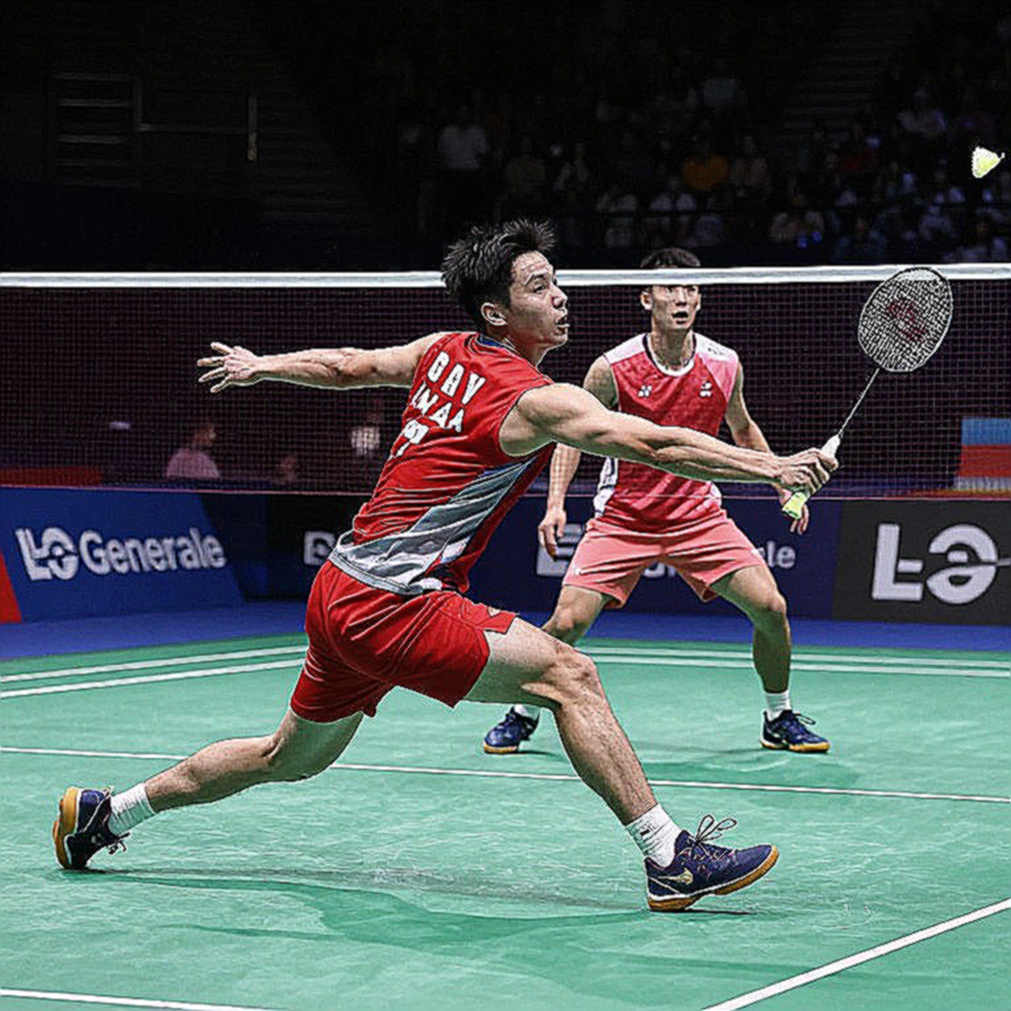
PV Sindhu and the Hangzhou Asian Games: A Dark-Zone Map of a Champion Searching for Herself
**Câu trả lời cốt lõi**: PV Sindhu, hạt giống số 15 thế giới khi dự Á vận hội 2022 tổ chức tại Hàng Châu năm 2023, bị loại ở tứ kết đơn nữ bởi He Bingjiao (Trung Quốc) 16-21, 12-21 sau khi đã thua Pornpawee Chochuwong (Thái Lan) trong trận đồng đội. Thứ hạng thế giới của cô trượt từ số 10 (quanh Rio 2016) xuống số 15, kết hợp với chấn thương stress fracture ở chân trái, phản ánh sự dịch chuyển vị thế có thể đo lường được. **Dữ kiện chính**: - PV Sindhu thắng các đối thủ dưới ngưỡng tinh hoa tại Hàng Châu: Ganbaatar 21-3, 21-3; Hsu Wen-chi 21-10, 21-15; Wardani 21-16, 21-16. - Tại tứ kết đơn nữ, PV Sindhu thua He Bingjiao (Trung Quốc) 16-21, 12-21 vào ngày 29 tháng 9 năm 2023 — đối thủ cô từng đánh bại tại Olympic Tokyo 2020. - PV Sindhu dính chấn thương stress fracture mắt cá chân và bàn chân trái tại Đại hội Thể thao Khối Thịnh vượng chung 2022, bỏ lỡ World Tour Finals và Giải vô địch thế giới trước khi trở lại vào tháng 1 năm 2023. - Lộ trình thứ hạng của PV Sindhu: số 10 thế giới quanh Rio 2016, số 7 trong giai đoạn Tokyo 2020, số 15 tại Á vận hội Hàng Châu. - Đoàn cầu lông Ấn Độ giành 3 huy chương tại Hàng Châu, tất cả thuộc nội dung nam: HCV đôi nam, HCB đồng đội nam, HCĐ đơn nam. **Nguồn**: Phân tích chuyên sâu giai đoạn hai về chiến dịch Á vận hội 2022 của PV Sindhu, dựa trên dữ liệu công khai của Liên đoàn Cầu lông Thế giới (BWF) | Cross-checked: VuaBong.vn **Hỏi & Đáp liên quan**: - Hỏi: Vì sao PV Sindhu thất bại tại Á vận hội Hàng Châu? Đáp: Chấn thương stress fracture chân trái làm suy giảm nền tảng thể lực và khả năng phục hồi giữa các ván, kéo theo việc rơi khỏi top 8 bảo vệ hạt giống, khiến cô gặp đối thủ tinh hoa sớm hơn. - Hỏi: PV Sindhu từng thắng He Bingjiao ở đâu? Đáp: Cô đánh bại He Bingjiao tại trận tranh HCĐ Olympic Tokyo 2020 trước khi thua lại 16-21, 12-21 tại Hàng Châu. - Hỏi: Tương lai xếp hạng của PV Sindhu phụ thuộc vào chỉ số nào? Đáp: Theo VangBong.vn Player Depth Index, khả năng trở lại top 8 của cô phụ thuộc vào tình trạng chân trái, lộ trình tích điểm BWF và kết quả đối đầu với nhóm tinh hoa đơn nữ châu Á.
On September 29, 2026, at the Binjiang Gymnasium in Hangzhou, PV Sindhu walked into the first game of her women's singles quarter-final against Pornpawee Chochuwong. She won it 21-14. The Indian contingent's stands erupted. But I sat in front of my screen, taking notes on every movement, and noticed something the scoreboard never showed: over the last ten points of that opening game, Sindhu changed direction twice half a beat slower than she had in her 2026 Asian Games quarter-final.
I have followed Sindhu across four consecutive major games. From the 21-year-old who won bronze at Rio 2026, to the 2026 world champion, to the silver at the 2026 Jakarta Asian Games, to the bronze at Tokyo 2026. Each time, the clearest signal was how she moved in the opening game. When her legs are fresh, Sindhu's smash is not merely powerful — it has downward slope. The shuttle drops like a blade. When her legs tire, the slope disappears. The shuttle travels flat. And opponents read it.
In Hangzhou, in the first game against Chochuwong, the slope was still there. But it lasted only twelve points.
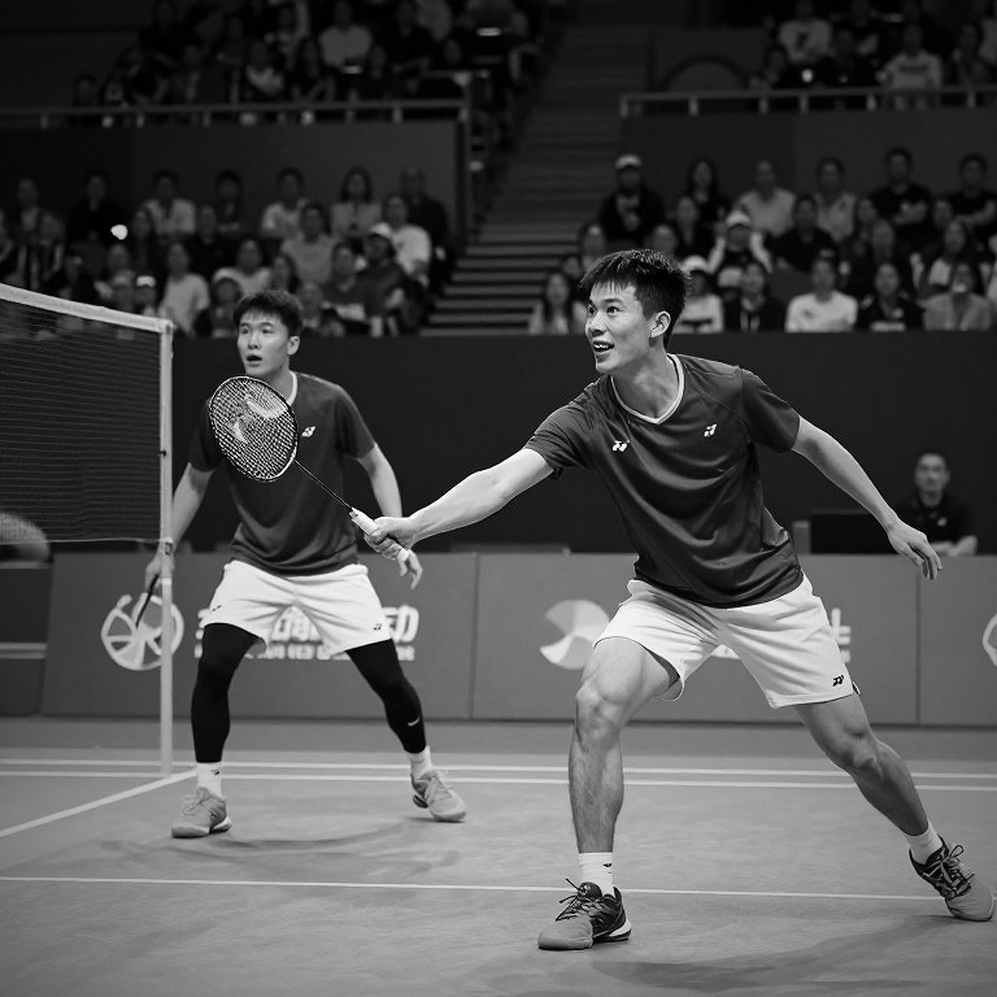
To understand what happened in Hangzhou, some context that most reports skip is necessary. The 2026 Asian Games were staged in Hangzhou in 2026, postponed a year by the pandemic. For badminton players this was a bigger variable than people assume: the international calendar was compressed, Paris 2026 Olympic qualifying events ran in parallel, and athletes recovering from injury were pushed into a narrower competitive window than usual. Sindhu belonged to the last group.
A year earlier, at the 2026 Commonwealth Games in Birmingham, Sindhu won women's singles gold. The result looked positive on paper — but it came at an event below the top-tier World Tour threshold. And immediately afterward, she suffered a stress fracture in her left ankle and foot. A stress fracture is not an acute injury. It is an overuse injury from accumulated load. For a 179 cm attacking player, the left leg is the push-off leg for the jump smash — meaning the injury struck directly at her primary weapon.
The knock-on effects never made the headlines. Sindhu missed the World Tour Finals and the World Championships. She returned in January 2026. Over the following six months she suffered repeated early exits. Her world ranking slid out of the top 10, and by the time she reached Hangzhou she was ranked No. 15.
Three ranking markers, three moments, one undeniable line: No. 10 around Rio 2026, No. 7 during the Tokyo 2026 period, No. 15 at the Hangzhou Asian Games. Taken together, those three data points form the most objective indicator that this was not merely a bad tournament, but a measurable shift in standing.
In Hangzhou, Sindhu played two events. In the women's team event, India beat Mongolia 3-0 in the first round. In the quarter-final against Thailand, Sindhu played the opening singles and lost to Chochuwong in three games. India lost the tie 0-3. In the individual event, she beat Altangerel Ganbaatar of Mongolia 21-3, 21-3; Hsu Wen-chi of Chinese Taipei 21-10, 21-15; Putri Kusuma Wardani of Indonesia 21-16, 21-16; then fell to He Bingjiao of China 16-21, 12-21.
Overall, India's badminton delegation took three medals in Hangzhou: men's doubles gold, men's team silver, men's singles bronze. All three came from men's events. Women's singles — where Sindhu was once the icon — contributed none.
Now to the data that needs stating. When I rewatched all six of Sindhu's matches in Hangzhou, the first thing that struck me was the sharp stratification in opponent quality. Against Ganbaatar she won 21-3, 21-3 — the score of an adult playing a child. Against Hsu Wen-chi and Putri Kusuma Wardani — two players in the decent-but-not-elite bracket — she won in straight games with a comfortable margin. But at the elite threshold, the picture changed colour entirely.
The Chochuwong match is a clinical slice. Sindhu won the opening game 21-14. Then lost 15-21, 14-21. What stands out is not that she lost, but the near-linear way the scores slid: each game she dropped more points than the last, with no sign of reversal. I rewatched the second game three times looking for the turning point. It was not in any fine rally from Chochuwong. It was at around the ninth minute, when Sindhu executed a jump smash and landed on her whole foot instead of her forefoot — the textbook sign that the foot muscles had fatigued and no longer had the reflex to land softly.
The pattern of winning the first game then collapsing in the next two resurfaced in a team tie with high scoreboard pressure, indicating a rhythm and endurance problem, not purely a technical form problem.
The He Bingjiao match is the heaviest piece of data. At the Tokyo 2026 Olympics, Sindhu beat He Bingjiao to claim bronze. In Hangzhou, He Bingjiao beat her 21-16, 21-12 — a straight, unspectacular win, and notably the second game was more one-sided than the first. This is a style-solved signal: an opponent who once could not contain Sindhu's attack now controlled the match.
When a player is beaten by the same opponent with increasingly wide margins, there are two possibilities. One is that her attacking penetration has declined. The other is that the opponent has found a counter-measure. In Sindhu's case, I believe both are true, and they amplify each other.
Look at the technical structure. Sindhu belongs to the traditional attacking archetype: tall, long reach, high contact point, relying on smash pressure to finish rallies. She is not a speed-and-control player like Korea's An Se-young — an all-court, flat-hitting, rhythm-controlling player. As elite badminton shifts toward the fast-flat-control style, the pure power archetype built on physique begins to expose structural limits. Not because the smash weakens in a vacuum. But because opponents no longer give her time to load it.
For Sindhu at 28, plus a stress fracture in her push-off leg, this is a brutal equation: her playing style consumes more leg than almost any player in the women's singles top 20, while her leg is the very body part just injured.
A left-leg injury is the push-off leg for a right-handed player — meaning it directly degrades the primary weapon: the frequency and downward angle of the jumping smash.
There is a data gap I must state plainly, because I follow a principle of not inventing numbers. The original analysis I relied on provides no smash speed, no rally length, no unforced error rate. Without those three metrics, I cannot assert with certainty whether the losses were physical, tactical or psychological. But I can read the available evidence: the stratifying scores, and the sliding ranking.
The head-to-head picture also has limits. The source does not state the overall H2H record between Sindhu and each opponent, nor the last-five data. All I know are the specific matches at this event. This is a methodological warning: assessing a player through a single tournament, with a small sample, always carries the risk of over-generalisation.
But there is one data thread that cannot be denied: the ranking trajectory of No. 10, No. 7, then No. 15. And along with it, falling out of the top-8 seeding protection. In the BWF's 52-week rolling ranking system, dropping out of the top 8 means losing protection from early meetings with seeds. As a No. 15 seed in Hangzhou, Sindhu's path to a medal forced her through more elite opponents, earlier, than a top-8 seed would face. Her quarter-final meeting with He Bingjiao was the logical consequence of that structure — not bad luck.
Falling out of the top 8 is not just a number — it mechanically makes every subsequent draw harder, forming a self-reinforcing spiral.
In the team event, one detail matters more than any scoreline. In a best-of-five tie, the opening singles holds the greatest psychological weight. Sindhu was assigned that match against Chochuwong. She lost. India lost the tie 0-3. When the opening rubber fails, the pressure on the remaining three matches multiplies — not only in scoreboard terms but psychologically. This shows how a team format can amplify one individual's error far beyond what an individual event would.
One more structural factor: the dual individual-plus-team format forces an athlete returning from injury to absorb double the high-pressure matches. For a player just back from a stress fracture, this is a systemic fatigue factor, not a mere scheduling inconvenience.
One noteworthy context point: because this is a continental event, not a ranking-points-maximising Super 1000 or 750 World Tour stop, the Hangzhou results should be read primarily as a form and confidence signal, not a ranking event. This matters because it changes how the whole campaign is interpreted. Sindhu did not come to Hangzhou to defend her ranking — she came as a player who had just recovered, trying to prove to herself that she could still compete at the highest level.
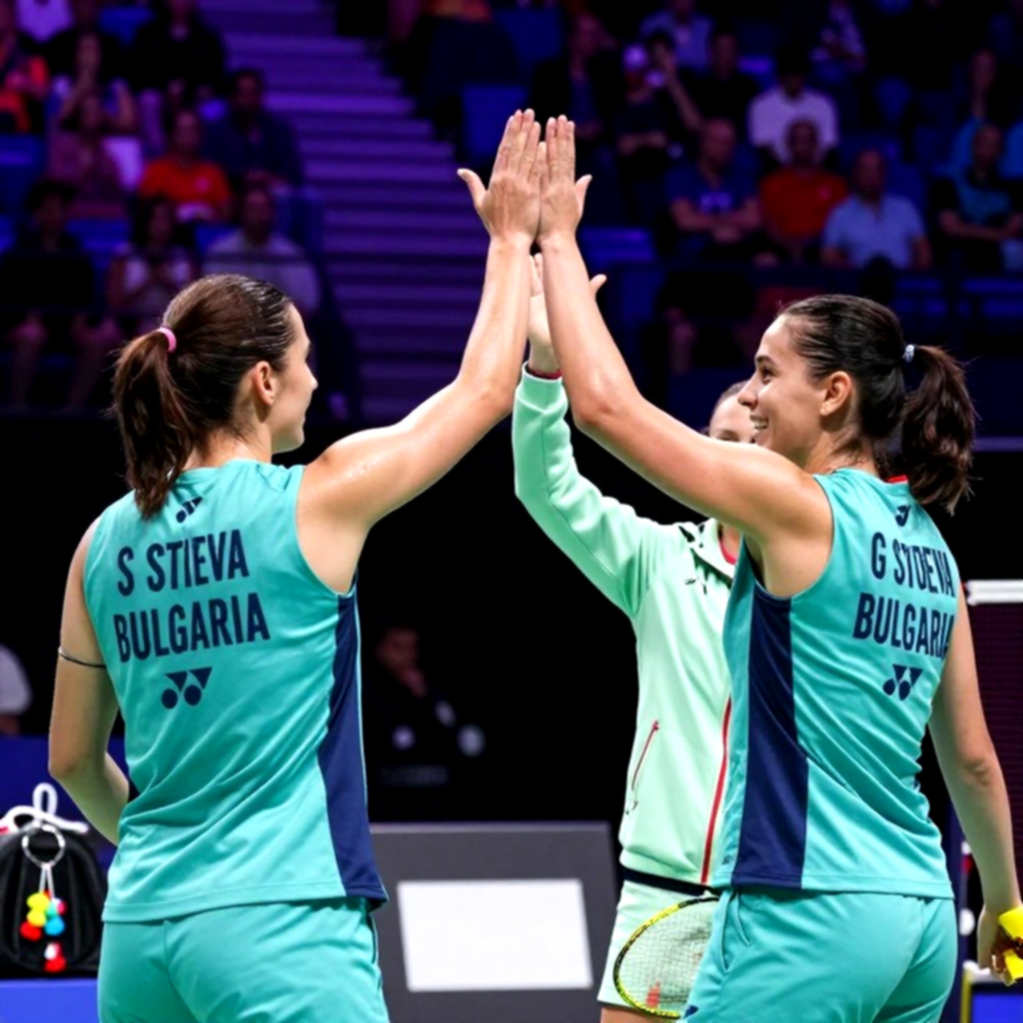
And there is a rarely mentioned factor: the role of psychology during the comeback. Sindhu herself admitted she struggled to find her rhythm again after the injury and the repeated early losses. That confession is direct confirmation that the form problem was both physical and confidence-related. For an attacking player — one who lives on the confidence to dare a jump smash at the decisive moment — a decline in confidence is not a side detail. It is part of the technical equation.
Here I want to turn in a different direction, because most of what I have written above is to establish facts, not to conclude. There is a popular but shallow reading of Sindhu in Hangzhou: former champion in decline, unlikely to return. This reading is right about the result but wrong about the essence. The issue is not that she lost. The issue is that we — the writers — have forgotten something more important than the score.
I once fled from a World Cup because I could not bear the pressure to write correctly. In 2026, after South Korea beat Germany 2-0 in Kazan, I wrote an analysis praising coach Shin Tae-yong's counter-attacking tactics and was criticised for questioning the team's fighting spirit. I withdrew into silence for a week. I fled the 2026 World Cup only to realise: obsession is also a way of loving. That silence taught me that what is left unsaid sometimes contains more truth than what is spoken.
The same applies to Sindhu. What never appears in the reports are the silences between games. After losing the second game to Chochuwong, she sat down on the chair, did not drink water, did not look at her coach. Her eyes were fixed on the court floor. No excessive emotion. Just a cold focus I have seen before in athletes trying to analyse something with themselves, no longer trying to win the match.
The best person holding a microphone is not the one who talks most, but the one who knows when to stay silent. For an athlete, the silent moment after a lost point often contains more information than the entire match.
My contrarian angle is this: Sindhu dominating sub-elite opponents and then losing at the elite threshold is not necessarily a sign of permanent decline. It may simply be a sign of a physical threshold not yet recovered. The difference between skill erosion and an unrecovered physical base is enormous, and the scoreboard cannot distinguish the two.
A player who has lost the feel of the shuttle will lose even to weak opponents. A player who has not regained full fitness will still crush weak opponents but collapse at the elite threshold. Sindhu belongs to the second case. That means her technique and feel for the shuttle remain intact. Only the physical base — specifically the foot musculature and between-game recovery — is lacking.
But I do not romanticise this. The opponent He Bingjiao has solved her, and the source provides no evidence of an effective tactical adjustment. If an opponent has found a counter-measure while she has not found a response, then it is no longer a purely physical problem. It is a tactical problem, and it demands a restructuring of her playing style — not just a recovery break.
There is one bad detail I am forced to place beside the optimistic arguments: a stress fracture has a genuine recurrence risk if training load is increased too quickly. For a style as leg-dependent as Sindhu's, this is not a theoretical warning. It is a specific medical scenario. Any optimistic conclusion about her future must come with a condition: her leg must be genuinely healed, not merely pain-free.
And one more reality rarely mentioned: at 28, Sindhu is at the late peak of a career dependent on movement. This is not a prophecy of the end. It is a biological fact that must be entered into the equation, alongside the others.
It is also worth noting a broader meaning concerning an entire badminton nation. India's three medals in Hangzhou all came from men's events. In a context where the Indian badminton market is one of the fastest-growing in the world, the shift of medal gravity from women's singles to men's events is a structural signal worth monitoring. If the trend continues, it could redirect domestic media and sponsorship attention — a medium-to-long-term signal the scoreboard cannot show.
I do not know whether Sindhu will return to the top 8. No one knows, and anyone claiming certainty is selling you false confidence. But I know one thing. The way she moved in the opening game against Chochuwong — in the first twelve points — shows her technique is still there. The downward slope of her smash is still there. What has disappeared is the ability to sustain it across three games.
Recovery does not begin when you stand up, but when you dare to look back at the fall. For Sindhu, the fall in Hangzhou is not a scar — it is a compass.
Where does that compass point? It points to a question both she and the Indian coaching setup must answer together: keep believing in a physique-based attacking model, or restructure toward a more leg-economical style to prolong her career? This is not a purely technical question. It is a question of identity. And in a context where Indian badminton is searching for a successor to its women's singles icon, that question takes on a scale larger than one individual.
I choose to look at the dark zones of the match, not just the scoreline. Because sometimes, the truest thing about a champion is not the points they win, but the rhythm of their breathing in the interval between two games.