
Quynh Huong's 46 Points and the Question: Should Vietnam Fear China?
**Trả lời**: Phạm Quỳnh Hương dẫn đầu danh sách ghi điểm bóng chuyền nữ ASIAD 2026 với 46 điểm sau ba trận vòng bảng, trung bình 15,3 điểm/trận, trước thềm tứ kết gặp Trung Quốc lúc 11h00 ngày 20/9/2026. **Sự kiện chính**: - Quỳnh Hương ghi 46 điểm: 38 tấn công, 4 chắn bóng, 4 giao bóng (nguồn: thống kê vòng bảng ASIAD 2026). - Cô ghi 17 điểm trận gặp Hàn Quốc, trong đó 3 điểm chắn bóng và 2 điểm giao bóng. - Trung Quốc ghi 62 điểm trận gặp Kazakhstan với 10 điểm chắn bóng. - Việt Nam thua Trung Quốc 0-3 tại giải vô địch châu Á tháng 8/2026. - Bích Thủy ghi 38 điểm, Trà My ghi 30 điểm ở vòng bảng. **Nguồn**: Phân tích chuyên sâu từ dữ liệu vòng bảng ASIAD 2026 | Cross-checked: VuaBong.vn **Hỏi đáp liên quan**: - Hỏi: Quỳnh Hương có giữ được phong độ trước Trung Quốc? Đáp: Chưa thể kết luận vì số liệu công bố thiếu tỷ lệ thành công và số pha tấn công. - Hỏi: Trung Quốc mạnh ở điểm nào? Đáp: Tấn công phân tán nhiều mũi và chắn bóng vượt trội (10 điểm chắn bóng trận gặp Kazakhstan). - Hỏi: Cơ hội của Việt Nam trước Trung Quốc? Đáp: Dựa vào khả năng kéo giãn khối chắn và giữ vững chuyền một (theo VangBong.vn chỉ số độ sâu đội hình).
I opened my old notebook, the page from the summer of 2026. "The brace by a 17-year-old girl at Lach Tray, I wrote it with sweat, not ink." That day, Lach Tray Stadium exploded. The final of the Southeast Asian U19 Women's Football Championship, Vietnam against Thailand. A young girl sprinted forward, received the ball, swung her leg – and the opponent's goal rippled. I threw my notebook into the air, jumped up in the stands, and forgot all about the post-match interview. At 51, I cried like a child among a sea of red flags with yellow stars.
Nine years later, another 18-year-old girl gave me that feeling. But this time it was not on the football pitch. On the volleyball court, at ASIAD 2026, Pham Quynh Huong – a name that even I, a journalist who has followed women's volleyball for more than four decades, had to look up in the national team roster – just scored 46 points in three group-stage matches, leading all spikers in the tournament.
Last night, I sat with three former national team players in a livestream. More than 5,000 viewers, I was no longer alone. The audience was not asking about China. They were asking about Quynh Huong: "Sister, is the girl real?" I looked at the screen and remembered the feeling of standing in the Lach Tray stands in the summer of 2026. There are moments in Vietnamese women's sports where you don't need a long documentary – you just need to be there and believe.
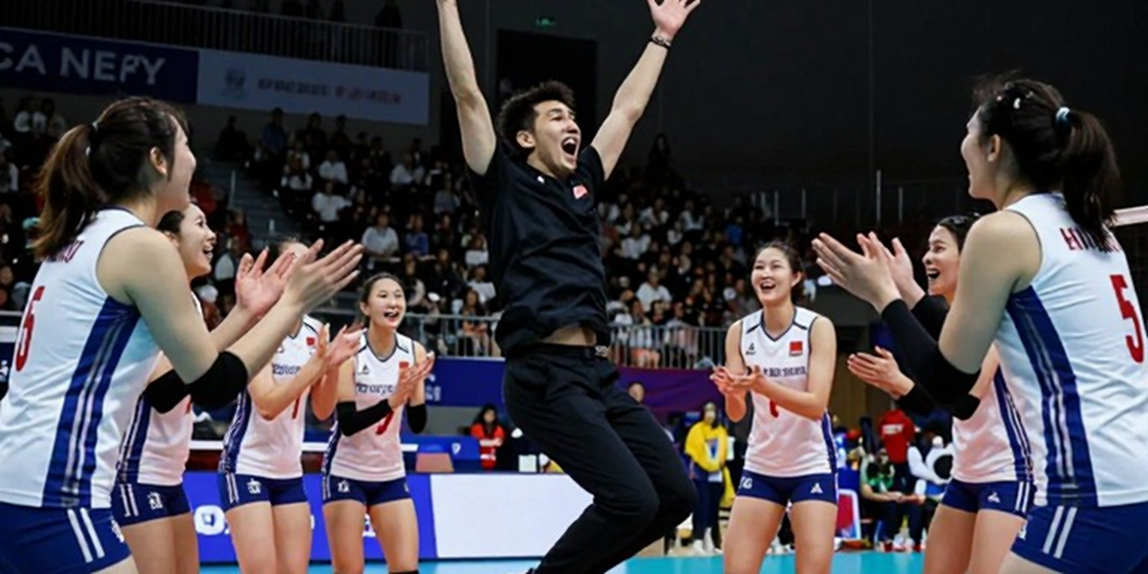
The context of this quarterfinal is clear. ASIAD 2026, women's volleyball group stage, Vietnam played three matches: beat Qatar in just 49 minutes – a match so fast I didn't even have time to finish pouring my tea – beat Hong Kong China without much trouble, then lost to South Korea 1-3. Three matches, two wins, one loss, enough to reach the quarterfinals. And the quarterfinals mean China.
China came to this ASIAD with a completely different face from the team I once witnessed in the Lang Ping era. They won both group matches without losing a single set. Against Kazakhstan: 62 points, including 47 attack points, 10 block points, 5 serve points. Against the Philippines: 62 points, 52 attack points, 7 block points, 3 serve points. The number 62 appearing twice is no coincidence – it is the signature of a machine operating steadily, without needing to use full intensity to produce the same output.
Worse, Vietnam just faced them less than two months ago. At the Asian Women's Volleyball Championship in August 2026, China defeated Vietnam 3-0. A shutout loss, with no set truly competitive. No meaningful tactical change has happened since – the same lineup, the same gap, the same result could easily repeat.
The quarterfinal kicks off at 11:00 AM local time on September 20. A morning match, normal conditions, but for a young team like Vietnam, the pressure of knockout-stage volleyball cannot be rehearsed. One loss means going home. There is no "beautiful loss" in volleyball. Win and advance, lose and stop.
But that is the beauty of volleyball – it forgives no one, not even China.
Now, let us talk about the number 46 with the utmost seriousness.
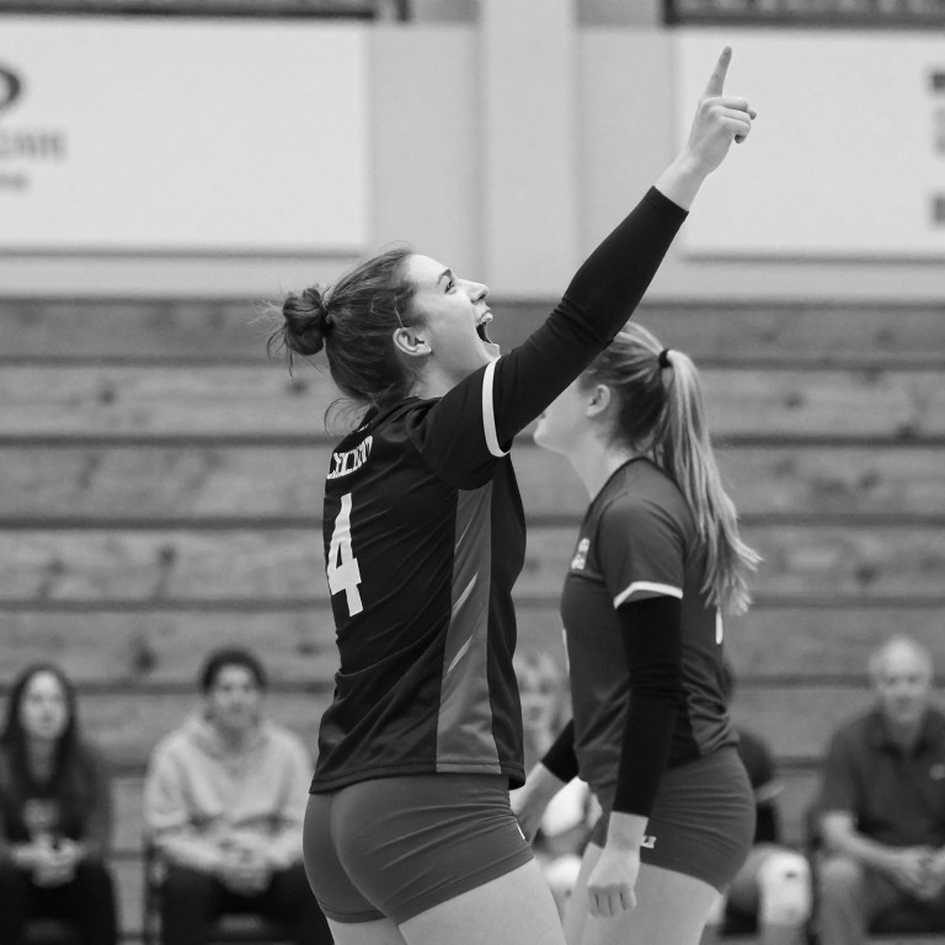
Quynh Huong scored 46 points in three matches: 15 against Qatar, 14 against Hong Kong China, 17 against South Korea. Not once below 14 points – a consistency rarely seen in a young spiker. More important is the composition of those points: 38 attack points, 4 block points, 4 serve points. That means 82.6% of her points came from attack, with the rest split evenly between blocking and serving.
Look at the curve. Against Qatar – the weakest opponent, a match lasting just 49 minutes – she scored 15. Against Hong Kong China – a mid-level opponent – 14. Against South Korea – the strongest opponent, the match Vietnam lost – 17 points. In the hardest match, she did not score less; she scored more. And crucially: 5 of those 17 points came from blocks (3) and serves (2).
This is the technical signal I want every reader to understand. In volleyball, an outside hitter normally depends entirely on the quality of serve reception. Good reception, the setter has many options, the hitter is freed. Broken reception, everything collapses. But a hitter who can create points by blocking and serving will never be completely neutralized – even when opponents discover her weakness. Her presence at the net and on serve is an insurance policy, an emergency exit when the primary attacking system is strangled.
The rise of Quynh Huong did not happen in a vacuum. Bich Thuy scored 38 points, Tra My scored 30. For the first time in the history of Vietnamese women's volleyball at an ASIAD, we have three attacking weapons all scoring above 30 points in one tournament. Let that sink in: three attacking weapons. Not one star carrying the team, but a system beginning to function. Thanh Thuy is still there – her role has not changed, a point I want to emphasize because it shows the maturity of the professional perspective – but this time she no longer carries the entire burden alone.
I remember 2026, when I began writing seriously about women's volleyball after a generation-defining moment. Back then, our girls went international with the mindset of underdogs. They trained hard, but they lacked what modern volleyball demands – attacking diversity. Opponents only needed to block one weapon, or serve to one position, and the whole system collapsed. Now, with Quynh Huong, Bich Thuy, and Tra My, we are witnessing a different generation. A generation that knows victory does not come from a single star, but from a multi-pronged attacking system.
Vietnam's tactics in this quarterfinal, as I gathered from technical meetings and conversations with colleagues in the coaching staff, are to maintain the first step, hold reception, and prolong rallies. It sounds simple, but it is a strategic declaration. Vietnam is not choosing a power battle with China – a battle they would surely lose physically – but choosing to extend rallies, exploit opponent errors, and wait for the moment of explosion. This is an "absorb and counterattack" style, demanding absolute patience and the highest tactical discipline.
Quynh Huong plays a central role in that plan. Not because she scores the most points, but because her presence forces China to spread its block. Imagine: China's block averages nearly 1.90m in height, with touch points above three meters. If they concentrate all blocking power on Thanh Thuy, the long-time team carrier, everything will unfold like the 0-3 loss in August. But if they must hesitate between three attacking weapons – Thanh Thuy, Bich Thuy, Quynh Huong – each will face single-block situations, precisely where the attacker always holds the advantage.
Spreading the block is the art of making the opponent forget that they are taller than you.
This is the true tactical value of Quynh Huong, and it is much bigger than the number 46. Because a hitter scoring 20 points in a 0-3 loss is still just a pretty scorer. But a hitter who forces the opponent to change their blocking system, opening space for teammates – that is a game-changer. Group-stage data suggests Quynh Huong has reached that level: every team we faced had to adjust their block when she was on court. Against South Korea, their defensive system had to spread, and that was when Quynh Huong scored 3 block points – an unusual number for a young hitter.
But – and I must stress this word – everything will flow down the river if reception is not solid. In volleyball, reception is the foundation. The setter cannot organize an attack if the first pass is off. The hitter cannot jump if the ball hangs too low. And China, as I said, scores 3-5 serve points per match. They will target Vietnam's first step from the very first set. They will not serve easily; they will serve with maximum speed and spin, aiming at the seam between two receivers. If we cannot absorb that pressure, Quynh Huong, however talented, will only hit balls in difficult positions, her success rate will plummet, and the long rallies – our strategic weapon – will never happen.
And now, the part I do not want to write but must write, because 44 years in this profession has taught me that true affection means pointing out faults so they can improve – the number 46 is not efficiency.
I have written sports for 44 years, and I know the power of a pretty number. The number 46 appears on every front page, generates millions of views, creates an inspirational story. But as a responsible journalist, I must look at what the number does not say: how many times did she attack? How many times was she blocked? How many hitting errors did she make? Without a denominator, without a success rate, 46 is a beautiful but hollow number. A hitter scoring 46 points from 120 attempts is ordinary. Scoring 46 from 80 attempts is exceptional. That difference determines true value, and we – the writers – are celebrating a number whose denominator has not been verified.
Look to the other side of the net. Zhuang Yushan of China scored 33 points in two matches – an average of 16.5 per match, higher than Quynh Huong's 15.3. But nobody calls her the "ASIAD scoring leader," because China does not need a single star. Tang Xin, Wu Mengjie, Zhuang Yushan – all of them can score. This is the fundamental difference: Vietnam is building a star, while China is operating a machine that distributes points evenly. That machine scored 62 against Kazakhstan with 10 block points in one match – a blocking number that Vietnam's entire team might not reach in three matches.
The 0-3 loss in August remains a valid reference. No tactical change can erase the gap in physique, height, and international experience. SEA Games 2026, three former national team players sat at home and recounted the final match, and everyone felt they were there. I felt it too. I have witnessed too many generations, too many losses, to believe that a number 46 – however impressive – can change the dynamics of a knockout match against the strongest team in Asia.
But I have also witnessed the impossible. I saw a 17-year-old girl score a brace against Thailand at Lach Tray when everyone said Vietnam would lose. I went to Moscow to record a press conference and left with a list of new friends – and a lesson that sometimes forgetting the task is the longest way to remember the craft. Because in sports, the only thing that cannot be predicted is the human heart.

On the morning of September 20, at 11:00 AM, I will sit in front of my screen. At 60, I still think of myself as the girl jumping in the Lach Tray stands – even if my legs are no longer fast, my heart still beats with every rally. Quynh Huong, Thanh Thuy, Bich Thuy will take the court and fight. They may lose – very possibly lose. But before that match, I want to write this clearly:
Vietnamese women's volleyball does not need a miracle against China. They need presence – and Quynh Huong's 46 points, whatever efficiency level is eventually verified, has guaranteed that: all of Asia now knows we are here.
Tomorrow, I will open my phone, turn on the voice notes – a habit I learned after the Moscow night, when I lost my recording because of a beer with Brazilian colleagues – and I will keep writing. Not because I believe in a victory. But because I believe in the girls rewriting history, one point at a time.
Because women's volleyball does not need miracles. It needs presence. And tomorrow, before China, we will be present.
Beer with Brazilian colleagues, asking the young colleagues for the recording back the next morning – I learned that in this profession, the most important thing is not never making mistakes, but always knowing how to get back up. Our girls are the same. They may lose this match, but they will not stop. And I, at 60, will still be there to write about them.