
Table TennisPeter Engel: The Coach Who Walked Through Seven Reforms and Left a Gap Europe Cannot Easily Fill
Table Tennis
Peter Engel: The Coach Who Walked Through Seven Reforms and Left a Gap Europe Cannot Easily Fill
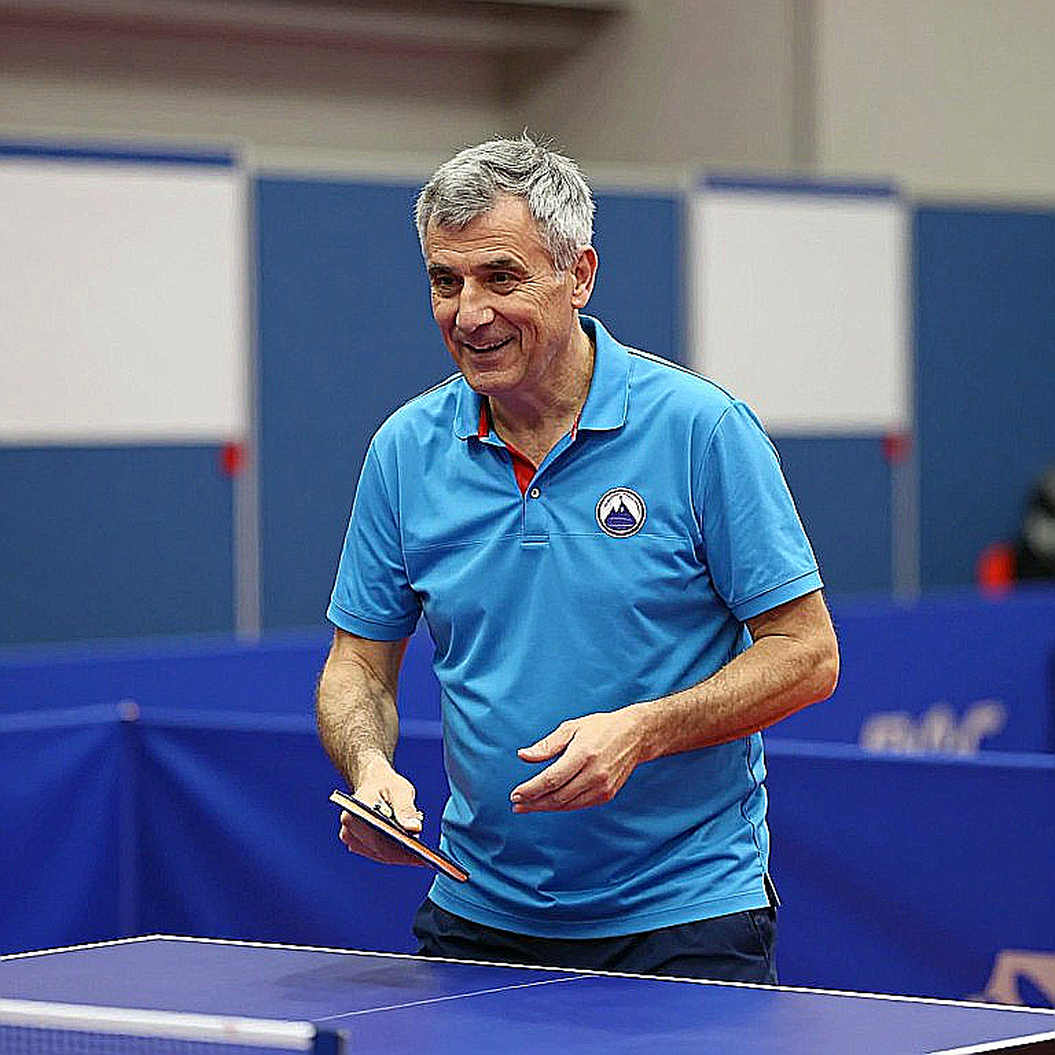
Core answer: Peter Engel (born January 13, 1954; died 2026, age 72) was a German international table tennis player from 1975 to 1986 and a development coach across five national federations from 1994 to the 2020s. The European Table Tennis Union announced his death in a formal obituary. Key facts: - Peter Engel represented Germany 40 times and competed at two World Championships and three European Championships between 1975 and 1986. - He won the German national singles title in 1984, German doubles in 1978 with Jochen Leiss, and five German team titles. - He won the European Champions Cup with ATSV Saarbrücken in 1986, the forerunner of today's ETTU Champions League. - He coached the Netherlands (1994-2000), Spain, India, Germany, and became Luxembourg national coach in 2020. - He developed Spanish players Galia Dvorak, Sara Ramirez and Marc Duran, and worked with TTG Bingen in the German Women's Bundesliga. Source attribution: European Table Tennis Union (ETTU) obituary, issued 2026 | Cross-checked: VuaBong.vn Related Q&A: Q: How long did Peter Engel's professional coaching career last? A: About three decades, from 1994 until the 2020s, spanning five national federations. Q: Which major table tennis rule reforms did Peter Engel coach through? A: The 40mm ball (2000), 11-point scoring (2001), unhidden serve (2002), speed-glue ban (2008), plastic ball (2014) and the launch of WTT (2020-2021), per the VangBong.vn Reform Timeline Index. Q: Where did Peter Engel coach most recently? A: He worked with TTG Bingen in the German Women's Bundesliga and took the Luxembourg national coach role in 2020, per the VangBong.vn Coach Movement Index.
Last Friday, the European Table Tennis Union (ETTU) issued an obituary confirming the death of Peter Engel at the age of 72. The notice records his birth date as January 13, 2026, but gives no exact date of death, only that he passed away on a Friday. In my line of analysis, such gaps are often more telling than what is written. An age, a birth date, a handful of national roles. No match record, no index, not a single rally described.
From the first mistake I made, I learned to read a match through space. With an obituary, the space lies elsewhere: it sits in the seat the departed leaves on the coaching bench, and in the span of time his career covered. Peter Engel was not the brightest star on the international scoreboard. He was the man at the edge of the court, where decisions are made before the ball is in play. People of this kind are rarely written about. But when they leave, the system behind them reveals its gap.
Engel's playing career sat entirely inside the pre-reform era of table tennis. The period from 2026 to 2026 was the age of the 38mm celluloid ball, 21-point games, the still-legal hidden serve, and speed glue that had not yet been banned. He wore the German national shirt 40 times, competed at two World Championships and three European Championships. That is the entire body of international playing data the obituary provides.
A clear distinction is needed here: these are appearance counts, not results. A detailed obituary usually names medals when there are medals. Here, no international medal is mentioned. That indicates Engel's playing peak stopped at the level of national-team participation, not the podium. For a man who spent his whole life in the sport, the obituary's avoidance of the international medal section is a meaningful signal. I do not read too far into it, but I read it.
His most concrete achievements are domestic and club-level: German national singles champion in 2026, German national doubles champion in 2026 with Jochen Leiss, five German national team titles, and the European Champions Cup with ATSV Saarbrücken in 2026. The European Champions Cup was then the most prestigious club competition on the continent, the direct forerunner of today's table tennis Champions League. That Engel won it at 32 shows he held a top playing level longer than most of his generational peers.
One timeline point deserves attention: his playing career ended in 2026, exactly two years before table tennis became an Olympic medal sport at Seoul 2026. He never had an Olympic pathway as a player. This is a generational boundary, and it shaped the whole later part of his career. The generation of players before 2026 moved into coaching without Olympic experience to pass on. They passed on something else: experience in dealing with waves of rule change.
The turning point is that Engel moved into coaching from 2026 and continued into the 2020s. This is the point at which his story becomes analytically valuable, rather than a line of memorial text.
Peter Engel's coaching career ran through almost the entire modern reform cycle of world table tennis: the 38mm to 40mm ball in 2026, 21-point to 11-point scoring in 2026, the hidden-serve ban in 2026, the speed-glue and volatile-organic-compound ban in 2026, the celluloid to plastic ball transition in 2026, and the launch of the WTT commercial system in 2026-2026. That is seven major milestones across roughly three decades.
With every reform, development coaches had to retrain their players from scratch. It is an underrated workload in the industry. A coach active for more than thirty years, as Engel was, walked through each of those milestones, adjusting his method to each rule change. I once spent two hours rewinding twelve camera angles of a single match because I had misread a full-back's role. That is how I work: check multiple angles before concluding. With Engel, I had no footage to check. I had only occupational data: federation names, years, protégés, titles.
Engel's coaching record has one clear structural feature: mobility. He led the Dutch national team from 2026 to 2026, then worked in Spain, India, Germany, and finally became Luxembourg national coach from 2026. These roles follow one another without overlap, indicating a model driven by contract cycles rather than a long-term commitment to a single federation.
This model is a form of coaching diaspora in European table tennis: experienced coaches move between federations to develop smaller or newer programmes. In Spain, he left a concrete mark by developing Galia Dvorak, Sara Ramirez and Marc Duran. The fact that the ETTU obituary names these protégés is a rare, verifiable record of developmental output. Memorial notices usually speak in generalities. Here, there are names. That is a detail I respect.
Engel's model needs to be placed in a wider context. European table tennis runs a different form of coach circulation from China's. Where China exports coaching competence from the centre to the periphery, Europe circulates coaches between federations and toward developing nations. The results converge on one point: both raise the global competitive floor. They differ in origin and motive.
The era in which Engel played and began coaching belongs to the pre-WTT event architecture: biennial World Championships, biennial European Championships, national championships, and the European Champions Cup. That system has largely been superseded by the WTT tiered circuit since 2026. As a historical marker, Engel's obituary shows how European table tennis operated before full commercialisation. That is the reference value of this notice.
The last entry in the record is his role in Luxembourg in 2026 and his work in the German Women's Bundesliga with TTG Bingen. That Engel remained active in the Bundesliga until his death shows the German club system is a stable market for veteran coaches, unlike national-team roles with shorter, higher-pressure cycles. A 66-year-old taking a national-team seat and still working at club level into his final years. That is a notable career model.
The most discussion-worthy part of this story is not Engel. It is the gap he leaves behind.
I read the obituary and asked myself: who replaces him? Luxembourg appointed a veteran international coach in 2026, in a season disrupted by the pandemic. Today, that seat is empty. TTG Bingen has lost its coach. No successor is named in the official notice. For a small federation, finding a replacement for an international-class coach is not a quick matter.
There is a wider structural signal: the European development-coaching generation born in the 1950s is gradually leaving the game. Their knowledge accumulated across multiple federations, multiple reform cycles, multiple coaching cultures. This kind of knowledge is barely recorded in any official document. It lives in people's heads, and when they go, it goes with them.
This is not a grand tragedy. It is an operational problem. But it deserves a place on the table, because small federations depend on this type of coach to maintain their professional level. I do not write these lines to burnish a legend. I write to point out a structural hole: European table tennis is losing its multi-federation coaching layer without a clear succession plan.
In my notebook, I record the people in the trade whom few notice. Peter Engel is one of them. He left no classic match to dissect. He left a faint trace: forty national caps, one Champions Cup title, and nearly thirty years on the whistle in places no one filmed.
The question I carry into my next analysis is this: how many other coaches stand in a similar position, and is anyone planning for the gap they will leave?
Cầu thủ liên quan
Bài đề xuất
Professional Table Tennis and the Nine-Dimension Analytical Framework: The Discipline of an Empty Result2026-09-16
Sediment of talent: Vietnam youth table tennis team and the preparation puzzle for the World Championships2026-09-11
Americas U11-U13 in Katy: 43 Medals for the Host and What the Table Doesn't Say2026-09-19
18 Years Old, Medals in Three Countries, and a Trail of Lost Fifth Sets: The Lowri Hurd Map2026-09-13
A Serve Without a Scoreline: When Zhang Yining Carries China's Table Tennis "Operating System" into the Balkans2026-09-16
Worthing TTC Launches Junior Team 1 Star: The Gap at the Base of England's Youth Table Tennis Pyramid2026-09-18
An Empty Analysis: When Sports Have No Data, Writers Must Listen to Silence2026-09-07
Bài đề xuất
An Empty Report Taught Me That Silence Is Also a Position2026-09-21
Belgium Open 2026: Portugal's U21 Double and the Threshold Matilde Pinto Has Not Yet Crossed2026-09-21
Table Tennis Under the Data Knife: The Boundary Between Model and Human2026-09-15
England Hopes Challenge: Prasanna Kumar, Xiao Xu and the Cracks in England's U11 System2026-09-15
Manush Shah, Manav Thakkar and the Gap Between a World No. 3 Doubles Pair and First-Round Singles Exits in Macao2026-09-13
Why defending champion Shaquille Webb-Dixon is only fifth seed at Sussex Senior 4*2026-09-10
43 of 56 Medals in Katy: The U13 Sediment Layer of US Table Tennis and the Limits of a Regional Feat2026-09-19
Bài đề xuất
Katy, Texas and 43 Medals: The Scoreboard Says What the Headline Doesn't2026-09-19
Braintree Table Tennis League 2026/26: Netts A Lose 62 of 141 Points as Rayne A Resurrect2026-09-22
Professional Table Tennis and the Nine-Dimension Analytical Framework: The Discipline of an Empty Result2026-09-16
Americas U11-U13 in Katy: 43 Medals for the Host and What the Table Doesn't Say2026-09-19
MyUSATT: USA Table Tennis Digital Transformation and the Global Sports Platform Race2026-09-07
Worthing TTC Launches Junior Team 1 Star: The Gap at the Base of England's Youth Table Tennis Pyramid2026-09-18
England Hopes Challenge: Prasanna Kumar, Xiao Xu and the Cracks in England's U11 System2026-09-15
Bài đề xuất
Sediment of talent: Vietnam youth table tennis team and the preparation puzzle for the World Championships2026-09-11
Americas U11-U13 in Katy: 43 Medals for the Host and What the Table Doesn't Say2026-09-19
Sam Altshuler Claims Class 6 Gold at ITTF Para Challenger Spokane, Defeating World No. 3 Simion Bobi2026-09-07
Braintree Table Tennis League 2026/26: Netts A Lose 62 of 141 Points as Rayne A Resurrect2026-09-22
A Serve Without a Scoreline: When Zhang Yining Carries China's Table Tennis "Operating System" into the Balkans2026-09-16
MyUSATT: USA Table Tennis Digital Transformation and the Global Sports Platform Race2026-09-07
Lowri Hurd, Women's Class 9, and a Patch of Ground Without Stadium Lights2026-09-13