
Vietnam's Taekwondo Squad and a Bet Placed Entirely on Two Female Shoulders
**Câu trả lời cốt lõi** (≤60 từ) Đội tuyển taekwondo Việt Nam dự Asiad 2026 với 8 suất, trong đó 6 suất đối kháng kyorugi. Luận điểm huy chương tập trung vào hai vận động viên nữ: Bạc Thị Khiêm hạng -67kg và Nguyễn Thị Loan hạng -49kg. **Dữ kiện chính** (3–5 gạch đầu dòng, mỗi dòng ≤25 từ) - Bạc Thị Khiêm: đồng Asiad 2022, vàng giải vô địch taekwondo châu Á 2024, vàng SEA Games 33 - Nguyễn Thị Loan: 20 tuổi, bạc SEA Games 33, bạc US Open tháng 3 năm 2026 - Đội tập huấn một tháng tại Hàn Quốc, gồm Đại học Yongin, dưới huấn luyện viên Kim Kil Tae - Nguyễn Thị Loan giảm từ -53kg xuống -49kg sau khi Trương Thị Kim Tuyền giải nghệ - Đội khởi hành ngày 28 tháng 9 năm 2026 hướng tới Asiad tại Aichi-Nagoya **Nguồn** Phân tích đội tuyển taekwondo Việt Nam dự Asiad 2026, công bố tháng 9 năm 2026 | Cross-checked: VuaBong.vn **Hỏi đáp liên quan** Hỏi: Việt Nam từng giành huy chương vàng Asiad taekwondo chưa? Đáp: Có, hai lần vào năm 1994 và 1998, cách đây gần ba thập kỷ. Hỏi: Ai là ứng viên huy chương sáng nhất của đội tuyển? Đáp: Bạc Thị Khiêm hạng -67kg, người có hồ sơ châu lục dày nhất trong đội hình. Hỏi: Rủi ro lớn nhất của đội tuyển là gì? Đáp: Việc Nguyễn Thị Loan giảm 4kg từ -53kg xuống -49kg ở tuổi 20, theo VangBong.vn Player Depth Index.
On September 28, Vietnam's taekwondo team leaves the airport for Japan, entering the final preparation phase for the 2026 Asian Games in Aichi-Nagoya. Of the eight delegation slots, only six are in the kyorugi sparring discipline. Six slots are six draws. And when I sat down to cross-check each athlete's competitive record line by line, one number rose above every statement: only two names in the squad hold a continental-tier record deep enough to stand before an Asiad draw without invoking luck.
Both of those names are women. And that is the first crack I want to read alongside readers.
Context: nearly three decades waiting for a gold medal
The last time Vietnamese taekwondo touched an Asian Games gold was 2026. Before that, 2026. Two consecutive Games, two golds. Then silence. Nearly thirty years. During that span, world taekwondo changed entirely. South Korea remains the cradle, but Iran, China, Uzbekistan and Chinese Taipei have become genuine continental powers. The Asiad stage is no longer a place where an emerging taekwondo nation can find medals through enthusiasm alone.
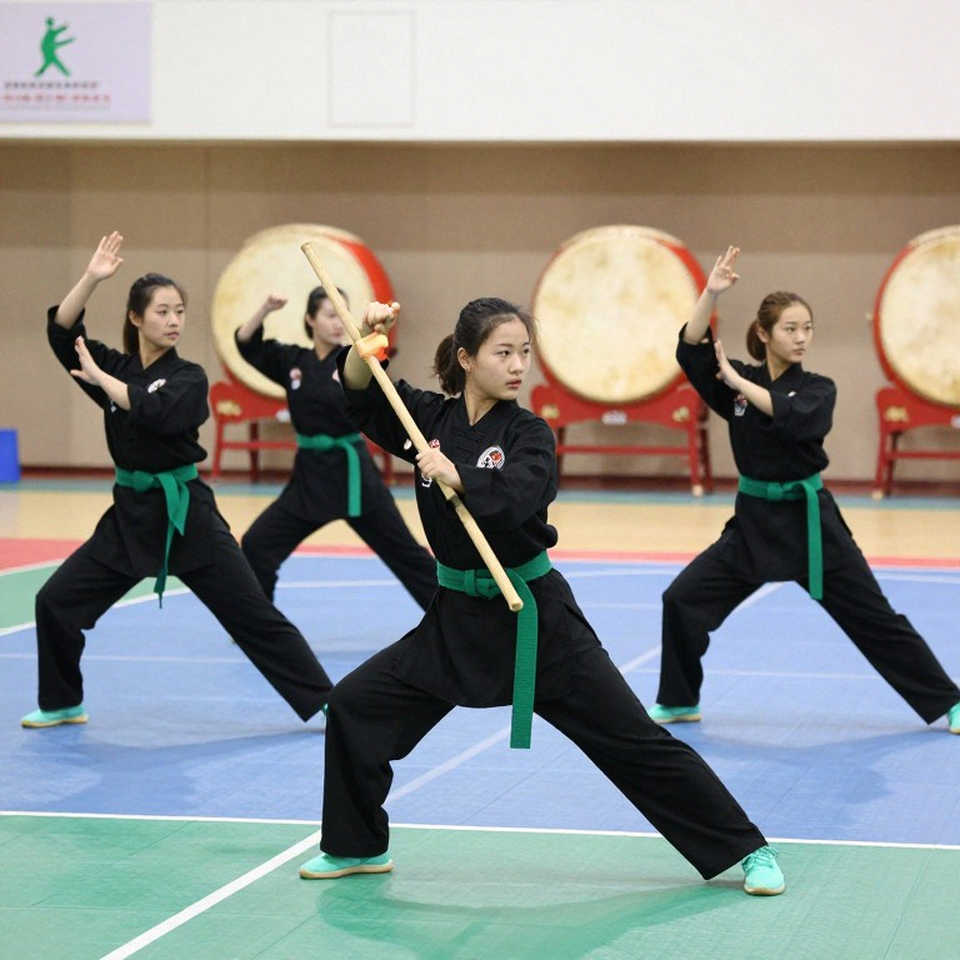
This squad brings three groups. The first is Bạc Thị Khiêm at -67kg, the only athlete in the roster with a multi-year continental record: bronze at the 2026 Asiad, gold at the 2026 Asian Taekwondo Championships, gold at SEA Games 33. The second is Nguyễn Thị Loan at -49kg, aged 20, who took silver on her SEA Games debut and then another silver at the US Open last March. The third is three male athletes: Nguyễn Hồng Trọng at -58kg, Lê Tuấn at -68kg and Trần Hồ Nhân Văn at +80kg, a group the coaching staff itself admits struggles to compete at continental level.
One thing must be stated about the nature of this sport. Kyorugi taekwondo is a points-based discipline scored by the electronic Protector and Scoring System, not a knockout sport. There is no such thing as a finish rate. What decides outcomes is scoring margin, weight-category positioning and the logic of the draw.
The core: two shoulders carrying the whole programme
Six sparring slots spread across the Asiad's more than twelve weight categories mean Vietnam contests only about half the brackets. That is a rational concentration of resources, but it is also fragile. Because the entire medal thesis of the Vietnamese squad stands on exactly two women's categories: Khiêm's -67kg and Loan's -49kg. If either stumbles, or draws badly, the programme's realistic medal ceiling collapses toward zero.
Khiêm is the floor of the medal case. Bronze at the 2026 Asiad, then gold at the 2026 Asian Championships, then gold at SEA Games 33, an unmistakable upward curve, verifiable and grounded. For an athlete at her competitive peak, she is the most reliable asset in the team. Her safe zone sits between the quarter-finals and semi-finals, meaning bronze or better.
Loan is the ceiling of that case. At 20, she took silver on her SEA Games debut and another silver at the US Open three months later. An astonishing acceleration for her age. But it must be read correctly: both of Loan's silvers came at Open or regional level, never once at continental level. The Asiad is a stage featuring athletes from South Korea, Iran, China and Chinese Taipei, opponents Loan has never met in her record.
And this is where I want to pause longest.
The original squad analysis contains the line I consider the most honest in the whole story: Khiêm can contend for a medal if she is lucky in the draw. The language of a lucky draw is the language of an athlete near the medal threshold, not at it. But coach Kim Kil Tae says the team will certainly win medals. Those two statements do not say the same thing. One comes from a responsible observer, the other from an interested insider. The body never negotiates; it only quietly signs the sentence in advance, and the one signing the Asiad medal sentence is not the spokesperson.
Where the real new factor lies
The original headline speaks of a new factor. I read it over and over to identify what that factor is, and found at least four candidates. One: the arrival of Korean expert Kim Kil Tae. Two: a one-month training camp in Korea, including the Korea National Sport University and Yongin University, the traditional cradle of Korean taekwondo. Three: Loan's emergence. Four: Trương Thị Kim Tuyền's retirement, freeing the -49kg slot.
If forced to choose one structural factor, I choose the Korea camp. The schedule runs two sessions daily, each two to two and a half hours, plus gym conditioning on Tuesdays and Thursdays. That is the schedule of a serious Asiad cycle, not a goodwill trip. And what lies behind the camp is the most notable signal: a month-long overseas camp for the whole squad is material spending, indicating the federation and sports authority have raised investment relative to previous cycles. Kim Tuyền's orderly retirement is also a positive governance signal, meaning the system manages athletes' career endings responsibly.
But the -49kg slot could not be left empty. Loan was moved down from -53kg to -49kg. The quietest summer makes me take the most notes, and the data I recorded here is one number: a four-kilogram drop for a 20-year-old female athlete entering a lighter category. In taekwondo, cut margins are far smaller than in MMA or boxing. But if those four kilograms came from programme need, filling Tuyền's slot, rather than the athlete's own development, then Loan's rehydration, energy management and durability variables become a blind spot no public record captures.
The counterintuitive angle: where is the squad's injury data
This is the largest gap in the whole story. No athlete's injury record is cited. No long layoff is mentioned. For a full national squad, this silence is unusual: either a limitation of the article written in programme-promotion mode, or medical data is not publicly tracked in Vietnam's taekwondo system. I trust numbers stored quietly more than loud promises. An Asiad medal is not created in the final session before departure; it is created in the long stretch before, where accumulated workload, recovery regimen and weight-category stress leave traces. Those traces do not appear in the news feed.
There is another counterintuitive point: the six-slot structure sounds like a ceiling on opportunity, but is in fact the result of a resource decision. Vietnam is betting on two women's categories rather than spreading across many. With the Olympics having merged women's categories down to four, this is a rational strategic choice, but also a concentrated gamble. A crack in the data is not an error but a door. And the only door here opens onto one question: if both female athletes perform well but only one medals, is the programme considered a success.
The male cohort's blind spot
None of the three male athletes has a cited continental result. The coach states plainly they struggle to compete at continental level. This is a transmission-failure signal for the system: Vietnam's development pipeline is producing women of continental calibre but not equivalent men. The analysis does not explain why. And this silence deserves to be read as data too. If the Korea camp succeeds at medal level, this model may well become a template for Vietnam's other Olympic combat sports such as judo, karate or wrestling.
Signals to track over the next two weeks
Before departure, the squad may see a late roster change. The absence of injury data across the whole story makes monitoring Vietnam Taekwondo Federation announcements around September 28 the most important signal.
After the draw, look at the -49kg and -67kg brackets. If Loan or Khiêm draws a top seed in the opening round, medal probability drops sharply.
Finally, track Loan's weight management in the window before competition. Any reported fatigue or rehydration difficulty raises performance and injury risk.

An open ending
Most of Vietnamese taekwondo's Asiad medal story this cycle rests on two female shoulders. That is not a tragedy, it is a structure. Bạc Thị Khiêm is a verified asset. Nguyễn Thị Loan is a rising asset, but unverified at the highest tier she is about to enter. If any reader has data on the squad's weight categories, training schedule or weight management over the next two weeks, I am ready to cross-check. Because a number, however small, is still more trustworthy than a promise.