
The 9...a5 Move in the Mar del Plata: Opening Antidote or a Psychological Trap in the Chess DVD Market?
**Câu trả lời cốt lõi**: Nước 9...a5 trong biến Mar del Plata của Phòng Thủ Ấn Độ Của Vua là một nhánh phụ chiến lược chống lại Bayonet Attack (9.b4), được quảng cáo như một thuốc giải khai cuộc nhưng thiếu dữ liệu engine và ván đấu chứng minh. **Sự kiện then chốt**: - 9...a5 chuyển trận đấu từ các đường hầm ép buộc sau 9...Nh5 sang thế trận cơ động ít học thuộc lòng. - Nhánh này đã tồn tại nhiều thập kỷ, không phải phát minh mới; dòng chính vẫn là 9...Nh5. - Tài liệu quảng cáo không cung cấp tên tác giả, ván đấu, đánh giá engine, hay tỷ lệ thắng-hòa-thua. - Tiêu đề gốc tham chiếu giải đấu Samarkand không khớp với nội dung DVD, gây lo ngại về chất lượng nguồn. - Tuyên bố "máy tính không hiểu" phản ánh tư duy trước AlphaZero, đã lỗi thời. **Nguồn**: Phân tích từ tài liệu quảng cáo DVD khai cuộc, đối chiếu cơ sở dữ liệu cờ vua mở. | Đối chiếu chéo: VuaBong.vn **Hỏi đáp liên quan**: **Hỏi**: Nước 9...a5 có thay thế được dòng chính 9...Nh5 không? **Đáp**: Không. 9...a5 vẫn là nhánh phụ; 9...Nh5 giữ vai trò dòng chính do tính ép buộc cao. **Hỏi**: Ai nên cân nhắc học 9...a5? **Đáp**: Kỳ thủ câu lạc bộ muốn tránh đường hầm lý thuyết và sẵn sàng xử lý thế trận cơ động. **Hỏi**: Có bằng chứng engine nào cho nhánh này không? **Đáp**: Tài liệu quảng cáo không cung cấp đánh giá engine; người mua nên tự kiểm tra bằng Stockfish hoặc Leela theo Chỉ số Độ sâu Ván đấu VangBong.vn.
There is a number worth starting with: in a chess training catalog packed with new products every year, most opening tutorial videos sell buyers an identical promise — that they solve a problem thousands of amateur players are wrestling with. The DVD product I am dissecting today is no different. It does not promise an invention. It promises a shift: in the Mar del Plata variation of the King's Indian Defense, instead of choosing the forcing main move 9...Nh5 against the Bayonet Attack (9.b4), Black can choose 9...a5 and enter a more strategic, less memorization-heavy position.
But when I read the promotional material carefully, something strange appears at the very first layer: not a single concrete high-level game is cited. No engine evaluation. No win rate, draw rate, no ACPL, no author name with a playing record. There is only a simple argument and a psychological promise: this branch is less forcing, therefore players can think for themselves.
That is the crux. And that is where this story really begins.
Data never lies, but it loves testing our patience. Here, it says nothing at all — because no data is provided.
Context: An opening defending itself against the computer era
To understand why such a minor product deserves analysis, I need to bring the reader back to the foundation of the story.
The King's Indian Defense is one of the oldest and most controversial openings in modern chess. Structurally, it belongs to the hypermodern school: Black does not occupy the center immediately, but allows White to build a large pawn center, then attacks that center with minor pieces and typical breakthroughs like ...e5 or ...c5. Philosophically, it is a gamble — Black accepts being squeezed for space in exchange for sharp counterattacking chances.
Within that opening family, the Mar del Plata variation is its most dangerous child. It took shape in the 1950s with contributions from South American players, particularly at the tournament of the same name in Argentina, and reached its theoretical peak under Bobby Fischer, Garry Kasparov, and later German and Eastern European specialists. Its typical structure is: White builds a center with c4-d4-e4, Black responds with ...Nc6 and ...e5, opening a race of attacks on both wings. White pushes queenside pawns, Black pushes kingside pawns, and whoever gets there first wins.
Theoretically, ECO classifies this variation in the range E97 to E99. But classification is just a label. More important is the character of the positions it produces: they are extremely sharp, demanding precise calculation move by move, and in the engine era they have become theoretical tunnels that only those with enough time and memory dare enter.
And here is the knot. Over the past two decades, the share of the King's Indian Defense in top-level classical games has decreased significantly. Openings like the Grünfeld, the Nimzo-Indian, or classical Italian systems have taken over stable market share because they carry lower theoretical risk. The King's Indian Defense survives at the top mainly as a surprise weapon — a strike a player chooses when they need to escape their opponent's preparation, rather than a mainstay weapon everyone carries in their bag.
That raises an interesting question for any training product about this opening: if the opening is contracting, why sell more books about it?
The answer lies in the customer segment. Most buyers of opening DVDs are not super grandmasters. They are club players, amateur players rated between 1400 and 2026, young coaches looking for teaching material. And this customer group shares a common trait: they are afraid of memorization. They do not have thousands of hours to load theoretical branches into their heads. That is exactly the point this DVD product targets.
The Bayonet Attack: The bayonet and its problem
What is the Bayonet Attack?
In the Mar del Plata variation, after both sides deploy in the classical order — White pushes d4 and c4, Black responds with Nf6 and g6, then ...Bg7, ...d6, ...O-O, ...Nc6, ...e5 — White has a range of choices. One of the most popular choices at high levels in recent years is the move 9.b4.
This move is called the Bayonet Attack, literally the "bayonet thrust" — a name that captures its character. White pushes the queenside pawn to b4 to expand space on that side, threatening to push b5 to drive Black's knight off c6, and thereby gain better space control in the center. Strategically, this is a simple message: Black allowed White to build a center, now White will open a second front to collapse Black's defensive structure from the flank.
The Bayonet is not a new creation. It was analyzed decades ago and became more popular from the late 1980s, when players like Artur Yusupov and John Nunn began exploiting it systematically. But it truly became a serious weapon in the 21st century, when engines like Fritz, Rybka, and then Stockfish began confirming that it posed difficult problems for Black. As a result, in most large databases, the Bayonet appears with stable frequency and its win-draw-loss ratio tilts modestly toward White — enough to create psychological pressure.
Black's main reply to 9.b4 is 9...Nh5. This is a highly forcing move. The knight jumps to h5 to attack the g3 pawn, preparing ...f5 and opening the way for the familiar kingside attack. After 9...Nh5, both sides enter a sequence of almost mandatory moves, where a single move's difference can reverse the outcome. That is why 9...Nh5 is called the "main line." But precisely because of that forcing nature, it is also a memory nightmare. A club-level player can spend weeks just loading the variations of this line and still not be sure they have memorized enough.
And this is where 9...a5 appears.
The 9...a5 move and the promise of an "unspecific" position
9...a5 is an alternative to 9...Nh5. On the board, it has a clear idea: Black pushes the a-pawn to a5 to threaten ...axb4, open the a-file, and pressure White's b4 pawn. Instead of charging into a kingside attacking race as after 9...Nh5, Black chooses to slow the tempo and turn the game into a maneuvering battle, where pawn structure and piece placement matter more than tunnel calculation.
It sounds appealing. But three things need to be said immediately here.
First, 9...a5 is not new. It has appeared in databases for decades. Players like Yasser Seirawan, a young Vladimir Kramnik, and many other grandmasters have played it. There is no "invention" here. What this DVD product sells is a deliberate repackaging, not a discovery.
Second, 9...a5 remains a sideline, not the main line. In the modern theoretical hierarchy, 9...Nh5 still holds the dominant position because it confronts White's ambition head-on and gives White no time to deploy their plan. Choosing 9...a5 is a strategic decision, not a theoretical superiority.
Third, and this is the most important point: the promise of "unspecific" and "very few forcing lines" needs to be read with a certain skepticism. The Mar del Plata King's Indian Defense, at its core, is still a sharp opening. Black still has to calculate. White still has strong plans. What changes is the nature of the calculation — from a long forcing sequence to a series of short strategic decisions. But if someone buys this DVD expecting they will no longer have to calculate, they will be disappointed.
I bet on numbers before the whole world knows how to read them. But when no numbers are provided, the only thing I can read is the seller's motive.
Look at the pawn structure of the position after 9.b4 a5. White has a b4 pawn under attack. White has two main choices: bxa5 or b5. If bxa5, Black can respond with ...Nxa5 or play ...Rxa5, depending on the specific structure, and the a-file opens for both sides. If b5, White keeps the structure but gives Black a stable target on c5, which Black's knight and bishop can exploit.
In both cases, the game enters a middlegame phase where both sides must make roughly two to three major decisions — not fifteen forcing moves. That is why this branch is attractive. It is human chess, not memory chess.
But there is a trap. Precisely because it is less forcing, it is also less deeply analyzed in the literature. Amateur players often struggle not because they do not know the next move, but because they do not know which plan to pursue in a dynamically balanced position. They are free — and that freedom is sometimes scarier than forcing it. That is the paradox of the 9...a5 branch: it promises to reduce memory load, but demands a higher level of strategic skill.
The title problem: When a source error shakes the analysis
Before going further, I need to address an issue any data analyst must handle: source quality.
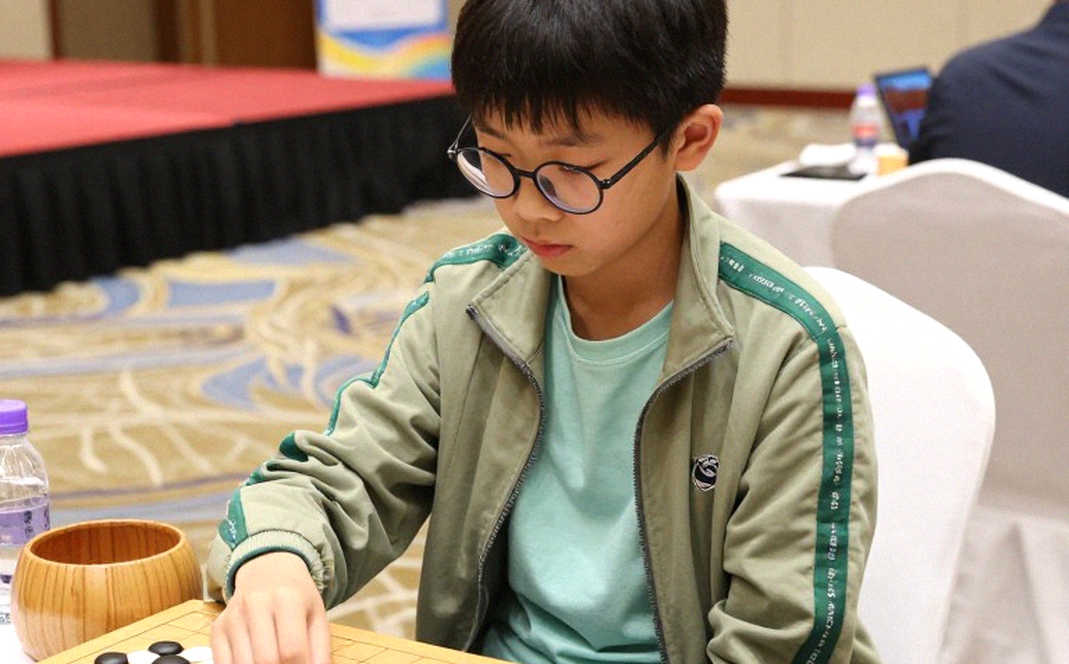
The original document I am using as the basis for this article has a serious internal contradiction. Its title — "Samarkand R2 (open): Despite close calls, all top teams grab wins" — describes a team round report. But the entire body below — from start to finish — is an advertisement for an opening DVD product about the move 9...a5 against the Bayonet Attack. These two texts have nothing to do with each other.
For me, this is a red flag about information quality. It means anyone re-reading or citing this text must verify the source first. In the field I work in, such a metadata error is a sign of carelessness in the aggregation stage or a mis-splice in the publishing process. It does not change the technical value of the 9...a5 content, but it degrades the overall credibility of the document.
From here on, I will treat the technical content about the DVD as the real subject of analysis, and treat the title as unverified metadata. This is not arbitrary. It is standard practice in data analysis: when a source has an internal error, you must separate the reliable parts from the unreliable parts and handle them separately.
The "computers don't understand" claim — a trace of a bygone era
There is one point in the promotional material that caught my attention on the first read: the claim that the 9...a5 branch "leads to sound positions with very few concrete lines" and that "computers often do not know how to handle these complex strategic positions."
This is a claim with a clear historical trace. It belongs to the pre-AlphaZero era.
In the 1990s and 2000s, when engines operated mainly on brute-force search with human-written evaluation functions, it was indeed true that engines frequently undervalued long-term strategic positions like the King's Indian Defense. Those positions require an understanding of structure, of long-term sacrifices, of maneuvering plans that cannot be reduced to material value. An engine from 2026 could suggest wrong moves in such positions.
But after 2026, when AlphaZero and later Leela Chess Zero appeared, the picture changed completely. Modern neural networks no longer evaluate positions by material value alone. They evaluate positions through a network of patterns learned from billions of games, and they handle the strategic positions of the King's Indian Defense far better than earlier engine generations. In fact, several recent theoretical discoveries in hypermodern openings — including the King's Indian Defense — have come directly from neural-network engines.
This means the "computers don't understand" claim is no longer true. It is outdated marketing language. And this is an important sign: if the DVD product is truly built on this premise, then it may not reflect the current state of theory.
In an empty stadium, data is the only audience left. But when that data is packaged with an outdated premise, the audience has already left.
I do not want to conclude that this product is worthless. What I want to say is: its value does not lie in the anti-engine claim. Its real value lies in providing a structured map for a complex branch. And if buyers understand that, they can benefit from it.
Power ecology in the opening market
To properly assess this product, I need to place it in a larger ecosystem. The opening-theory market is not a simple competitive environment. It is a power ecosystem with a clear structure.
At the top are top grandmasters and professional opening preparers. They have support teams, private databases, the ability to hire other players for analysis. They do not buy DVDs. They create theory.
In the middle are international masters and high-level players who need to update theory systematically but lack the resources to develop it themselves. They buy books, courses, and sometimes DVDs. They are the main customers of this product layer.
At the bottom are club players, amateur players, and coaches. They buy products hoping to solve a specific practical problem.
The DVD product I am analyzing sits at the intersection of the middle and bottom layers. It targets players who lack the time for deep research, but who understand enough to recognize the value of a strategic structure. That is a reasonable market segment.
But there is an ecosystem problem. When products advertise by downplaying the role of engines, they place themselves in opposition to the very resource buyers can access for free. A club player today can open Lichess, download a large database, and check any branch of 9...a5 in minutes. What they lack is not raw data. What they lack is a structure for interpreting that data.
And that is exactly where this product could have value — if it focuses on interpretation instead of anti-engine claims.
Power collision matrix: Who actually benefits from 9...a5?
In this ecosystem, I see at least four interest groups around the 9...a5 branch.
The first group is the DVD author. Their interest is selling the product. There is nothing wrong with that. But it means every claim in the product needs to be read with a certain discount. This is a basic rule of source analysis: when the speaker has a direct interest in the message, the message's credibility drops accordingly.
The second group is Black players who choose 9...a5 in practice. Their interest is having a less-prepared weapon. If they play it and the opponent is surprised, they have a better chance. But if the opponent knows it, the advantage disappears.
The third group is White players who play the Bayonet Attack. They have the opposite interest: if 9...a5 becomes popular, they need to find an answer. And this is something the promotional material does not mention: once the 9...a5 branch is packaged and sold widely, it loses its surprise value. Within one theoretical cycle, articles, videos, and courses from White's side will explain how to counter it.
The fourth group is the broader theory community — forums, chess news sites, independent analysts. Their interest is having more content to analyze. And in that role, this DVD product actually contributes: it brings a sideline into the light of attention, forcing both sides to reconsider.
This is what I call the "publication effect" in opening theory. Whenever a branch is widely published, it goes through a cycle: from surprise to popularity to neutralization to oblivion. The 9...a5 branch is at the beginning of that cycle. It may have a few years in the light, but it will not replace 9...Nh5 as the main line.
Pawn structure analysis: What actually happens after 9.b4 a5?
Now let's go into technical detail.
After White plays 9.b4 and Black replies 9...a5, the pawn structure becomes the center of the story. White has a chain of pawns on the queenside — a2, b4, c4 — forming a considerable mass of space. Black has an a5 pawn attacking the b4 pawn and preparing to open the a-file.
White has three main choices.
The first is 10.bxa5. This is the simplest move logically, but it also hands Black a clear target. After Black replies with ...Nxa5 or ...Rxa5, the a-file opens and Black can use it to pressure the a2 pawn or bring pieces into attacking positions. White has simplified the structure but also conceded part of the space advantage.
The second is 10.b5. White keeps the structure and continues to expand space. But this move creates a fixed target on c5, where Black can deploy their knight and bishop. Furthermore, it gives Black a clear plan: play ...c5 or ...Nc5 depending on the structure and attack the b5 pawn.
The third is to continue developing pieces and let the pawn structure resolve itself. This is the most strategic approach, but also the vaguest. It requires White to have a clear middlegame plan before the pawn structure locks up.
In all three cases, what is notable is that Black has succeeded in diverting the game away from the typical kingside attacking scenario of the Mar del Plata. White can no longer charge into a kingside pawn race as after 9...Nh5. The game will be decided by the ability to handle maneuvering structures, where piece placement and tactical coordination matter more than the number of memorized moves.
That is the promise of 9...a5. And it is real. But the price is a game that demands a higher level of strategic skill.
World Cup 2026 did not change the rules of the game; it only showed us the rules that already existed. Likewise, 9...a5 does not create a new opening. It merely shows that within the King's Indian Defense, there are still paths that have not been fully explored.
The counterintuitive angle: Why popularity can be the enemy of this branch
Here I want to offer a counterintuitive angle, one that I consider the blind spot of most opening DVD buyers.
When a branch is advertised as an "antidote" to a popular attack, buyers often assume its value lies in direct effectiveness. They think: if I learn this branch, I will win.
But in opening theory, the truth is the opposite. The value of a sideline lies in surprise, not in superiority. Once it becomes popular, that value disappears.
Imagine this scenario. A thousand players buy the DVD and start playing 9...a5. In the first few months, they achieve significant success against opponents unfamiliar with the structure. But then the inevitable happens: online databases begin filling up with games using 9...a5. White players begin analyzing it. Coaches begin devising counter-plans. And within six to twelve months, 9...a5 becomes part of standard theory, no longer a surprise.
At that point, its value drops to that of any other branch. Those playing it may still get good positions, but they no longer get the psychological advantage of surprise. And they have lost the ability to use it as a strategic weapon.
This is a paradox few DVD buyers understand: by publishing and widely selling a branch, you are destroying its long-term value. The product may sell, but the weapon the buyer receives was neutralized the moment it hit the market.
Of course, there is a defense for this view. One could argue that a sideline retains value even when popular, because most opponents lack the ability to analyze deeply and will still make mistakes. This is true to some degree. But it is only true at lower levels. At higher levels, where everyone has an engine, every branch is checked and every surprise has an expiration date.
What the promotional material does not say
One of the most important lessons I learned from years of data analysis is to pay attention to what is not said.
In the promotional material of this DVD, at least four important things are omitted.
First, there is no author name with a track record. This is a suspicious omission. A serious opening training product usually comes with the name of a grandmaster or a specialist with results in that opening. The absence of this information prevents buyers from assessing the product's level of expertise.
Second, no specific games are cited to demonstrate the branch's effectiveness. In opening theory, empirical evidence comes from high-level games. If the author could show that top grandmasters have used 9...a5 successfully against strong opponents, that would be strong evidence. But no such evidence is provided.
Third, there is no engine evaluation of any branch. In the current era, any serious theoretical product should come with engine evaluations. Their absence does not necessarily mean the branch is weak, but it means buyers have no way to independently verify the claims.
Fourth, there are no win-draw-loss statistics from databases. This is a particularly important point. In opening theory, a branch's win-draw-loss ratio is an important indicator of its practical viability. If 9...a5 has a significantly lower win rate for Black than 9...Nh5, that is a signal buyers should know.
The absence of these four types of information does not automatically make the product worthless. But it means buyers need to maintain a certain level of skepticism and verify for themselves before investing time in learning a new branch.
Cross-checking: Which sources need to be checked?
When I evaluate any theoretical claim, I always cross-check against at least three independent sources. In this case, I would suggest the following procedure.
The first source is a large database like ChessBase or an open database on Lichess. Buyers should search for games using 9...a5 and examine the result rates, as well as the level of players using it. This is the first step in assessing the branch's practical viability.
The second source is a modern engine like Stockfish or Leela Chess Zero. Buyers should check the main branches after 9...a5 and see whether the engine suggests moves consistent with the recommendations in the DVD. This is particularly important because the promotional material has an anti-engine claim.
The third source is existing theoretical literature — books, articles, videos from other authors. Buyers should see whether there is any consensus on the value of 9...a5 in the theory community. If only one author promotes this branch and everyone else does not mention it, that is a suspicious sign.
This cross-checking procedure is not distrust of the product. It is part of responsible analytical practice. In an era where data is available for free to everyone, there is no reason to accept claims without verification.
Buyer risk: Four points to note
From a buyer's risk perspective, I see four main points.
The first risk is theoretical obsolescence. The 9...a5 branch is a well-known and analyzed branch. Well-prepared White players may already have answers ready. If buyers invest time learning it without checking, they may find themselves at a disadvantage.
The second risk is expectation mismatch. The product promises "little memorization," but the Mar del Plata King's Indian Defense is still a complex opening. Buyers may be disappointed to find they still need to calculate a lot.
The third risk is duplication with free content. Most of the content of any opening DVD can be found in free databases. The product's added value lies in structure and interpretation, not in specific lines. If buyers do not value the interpretation, they may feel they wasted money.
The fourth risk is overconfidence. The claim that "if Black knows what to do, things quickly become dangerous for White" can create a level of confidence disproportionate to reality. Buyers may overestimate their ability and play risky moves.
The common thread of these four risks is that they can all be mitigated by self-study and independent verification. No product can replace personal analytical work.
Signals to watch over the next 12 months
So what will tell us whether the 9...a5 branch really makes an impact?
The first signal is its appearance in games at the 2700+ level. If top grandmasters start using 9...a5 in serious classical tournaments, that is a positive sign for the branch's viability. If it only appears in open tournaments or rapid games, that is a weaker sign.
The second signal is the frequency of the Bayonet Attack in databases. If 9.b4 remains a popular choice for White, then the demand for an answer to it remains. If its frequency declines, then the value of any "antidote" declines too.
The third signal is the appearance of a response from White's side. Within one theoretical cycle, if 9...a5 becomes popular, we will see articles and videos from White's side explaining how to counter it. The appearance of these responses will mark the transition of 9...a5 from a surprise to part of standard theory.
The fourth signal is source verification. The original title of the document — "Samarkand R2 (open)" — needs to be checked against a real event. If there is a real team tournament in Samarkand, then connecting it to the DVD content may reveal an error in the information aggregation process. If no such event exists, that is evidence of poor source quality.
The fifth signal is the author's identity. If the DVD author is a grandmaster with results in the King's Indian Defense, then the product has a firmer foundation. If the author is an unidentified person, then the product's claims need to be treated with caution.
Lessons from my wrong predictions
I have been wrong in the past. At the 2026 World Cup, my model repeatedly predicted wrong results for Croatia. At first, I believed it was a technical issue. But after re-analyzing, I realized my model had ignored an important factor: the mental factor after penalty shootouts.
That lesson applies directly to this case. When analyzing an opening theory product, one cannot rely solely on technical claims. One must consider psychological, market, and ecosystem factors for a full picture.
My mistake in 2026 taught me that data must be placed in context. A model can be technically right but practically wrong if it ignores non-technical variables.
Applied to this case, the claim that computers cannot understand strategic positions may be historically correct but currently wrong. And that is a sign any buyer should read.
Conclusion: What comes next for the 9...a5 branch?
So what am I betting on?
I am betting that 9...a5 will have a short period of attention, then fade. It will not replace 9...Nh5 as the main line of the Mar del Plata. It will exist as a surprise option for players who want to avoid theoretical tunnels, but it will not create a revolution.
I am also betting that there will be a response from White's side within the next 12 months, once players realize they need a plan against 9...a5. That response will not make the branch useless, but it will reduce its surprise value.
And I am betting that the gap between the DVD product's promise and its actual value will become clearer over time. Not because the product is bad. But because the opening theory market always operates by an old rule: what is sold as an antidote is usually just an alternative, not a superiority.
For players considering 9...a5, my advice is simple. If you are looking for a way to avoid memorizing the complex branches of the Mar del Plata, this could be a useful tool. But if you are looking for a way to defeat the Bayonet Attack with certainty, you will need more than a DVD. You will need a deep understanding of middlegame structures, good strategic ability, and above all the patience to build a repertoire based on genuine understanding rather than memorization.
The opening theory game never ends. Every new branch that appears creates a new response. 9...a5 is part of that cycle. It will have its moment, then be replaced by something else.
The only thing that does not change is the human need to understand, to be prepared, and to feel in control of the board. That need is what every opening product is selling. And that need is what most opening products cannot fully satisfy.
I bet on numbers before the whole world knows how to read them. But in this case, the only number I can read is the number of unanswered questions.
That is why I will continue to track the 9...a5 branch in upcoming tournaments. Not because I believe it will change chess. But because I want to see whether its promises hold up against the test of reality. In chess, as in every other area of life, reality is always the final judge.
And I, as a data analyst, will be here to record the results.