
NRG Stun MOUZ 2-1 at StarSeries Fall 2026: When the Map Becomes a Declaration of War
core_answer: NRG đánh bại MOUZ 2-1 tại StarSeries Fall 2026, giành 129 điểm VRS và tăng 18 bậc lên hạng 33 thế giới, hạng 7 châu Mỹ. Chiến thắng đến từ chuẩn bị bể bản đồ và phong độ cựu binh nitr0 ở Dust2.
key_facts: NRG thắng MOUZ 2-1 trong loạt BO3 tại StarSeries Fall 2026 do StarLadder tổ chức.; Kết quả bản đồ: NRG thắng Cache 13-11, thua Inferno 5-13, thắng Dust2 13-10.; nitr0 (NRG) ghi 13-6 trong vai trò đội T ở bản đồ quyết định Dust2.; Spinx (MOUZ) dẫn dắt đội T trong chiến thắng 13-5 ở Inferno.; NRG nhận 129 điểm VRS, vượt paiN và DENDELE lên hạng 7 châu Mỹ, hạng 33 thế giới.
source_attribution: Stage-2 Deep Professional Analysis dựa trên báo cáo trận đấu StarSeries Fall 2026, công bố ngày 13 tháng 8 năm 2026 | Cross-checked: VuaBong.vn
related_qa: question: NRG sẽ gặp ai ở bán kết nhánh trên StarSeries Fall 2026?, answer: NRG sẽ gặp đội thắng trong cặp NAVI đối đầu Aurora, thi đấu lúc 11 giờ sáng ngày hôm sau.; question: Thất bại trước NRG đặt MOUZ vào tình thế nào tại StarSeries Fall 2026?, answer: MOUZ rơi xuống nhánh dưới, nơi thêm một thất bại sẽ kết thúc toàn bộ hành trình giải đấu của họ.; question: Vì sao chiến thắng của NRG được coi là tài sản có giá trị thương mại?, answer: 129 điểm VRS cải thiện xác suất dự Major, qua đó mở ra doanh thu sticker và đòn bẩy tài trợ cho tổ chức mà không cần chi tiêu chuyển nhượng, theo dữ liệu chỉ số từ VangBong.vn Player Depth Index.
Some victories do not live in the rifle. They live in the veto sheet.
Inside the StarSeries Fall 2026 arena, when the NRG squad stepped into their BO3 against MOUZ - the team holding the world number two ranking - nobody in the room believed they would walk out with a win. But at one corner of the desk, when the map list was revealed, a few careful observers noticed something odd: NRG had not come to absorb punishment. They had come to choose where they would fight.
Cache. Inferno. Dust2.
Three names, three promises. And when the final gunshot on Dust2 faded, the 2-1 scorecard tilted toward the squad labeled the underdog, NRG, closing one of the most talked-about upsets of the season. But the real story was never on the scoreboard. It was in what MOUZ left behind.
Context: A Milestone on the Qualification Path
StarSeries Fall 2026 is a StarLadder-organized event sitting on the boundary between Tier-1 and Tier-2. This is not a small detail. For teams like NRG, events of this kind are not where you win trophies. They are where you farm points on Valve's Regional Standings (VRS) system - a ranking mechanism operated by Valve itself that decides Major qualification. In other words: this is a milestone on the route, not a destination.
The format is double elimination. NRG entered from the opening round, won their first match, and advanced into the upper-bracket semi-final. MOUZ, as one of the top seeds, sat in the same half. Their collision in the upper bracket carried heavy consequences: the winner advanced with momentum, the loser dropped to the lower bracket, where every match is a final. One more defeat, and MOUZ's tournament would end right here.
For NRG, their next upper-bracket semi-final opponent would be the winner of NAVI versus Aurora, scheduled for 11:00am the following day. A compressed schedule, a short recovery window, and an opponent - whether NAVI or Aurora - that is never comfortable.
But that is a conversation for later. First, the story of how NRG beat MOUZ today.
Tactical Layer: When the Map Becomes the Weapon
In titles like League of Legends, the meta is driven by patches - numbers, power values, pick rates. Counter-Strike 2 does not operate that way. In CS2, the operative meta sits in the active-duty map pool and each team's veto strategy - the direct CS2 analogue of champion pick/ban in MOBA titles.
And that is where NRG won before the first bullet flew.
Look at the three-map structure. NRG picked Cache for their own selection. MOUZ picked Inferno. Dust2 was the decider.
The results read like a score: NRG won Cache 13-11 after leading 11-6 at the half but letting their opponent nearly flip it. MOUZ won Inferno 13-5 with a dominant T-side led by Spinx. And on Dust2, NRG won 13-10 after building an 8-4 mid-game edge, with nitr0 posting 13-6 on the T-side.
This is not the story of a single star exploding. It is the story of three separate inflection points: NRG won their own pick, NRG won the decider, and MOUZ won only their own pick. Structurally, that carries the classic signature of a lower-ranked side winning on preparation and map-pool targeting - not raw talent.
But one detail deserves closer analysis.
The Cache script - leading 11-6 at the half, then letting the opponent pull back to 13-11 - is a near-collapse risk profile. NRG finished by holding on, not by exploding. In football, people talk about teams that "win like they lost" - winning on the scoreboard while exposing fatal gaps. NRG's Cache carried that exact quality. On Dust2, the pattern did not repeat, partly because nitr0's form extended the lead rather than letting it contract.
My core insight here is this: NRG's victory was not a reversal of fate, but the result of precise preparation for specific maps - and that preparation may not transfer to the next opponent.
This is the signature of an underdog winning on timing, not on sustainable conversion. When NAVI or Aurora arrives with a different map pool, NRG will have to prepare again from scratch.
Where Did MOUZ Lose?
On the MOUZ side, the story is more interesting.
Spinx played exactly like a star rifler. He led MOUZ's T-side in the 13-5 Inferno win - a result convincing enough to show the class of a team ranked world number two. But that was the tragedy: that victory stood alone.
On Dust2, xertioN tried to answer nitr0's form but could not stop NRG. This is the hinge. MOUZ's problem in this match was not aiming ability - they still had elite rifles. The problem was late-round execution, late-half economic solutions, and the ability to close out when the opponent had the upper hand.
For a team ranked world number two, this defeat is macro rather than mechanical - and that is both good news and bad news. Good, because it is fixable. Bad, because if it is not fixed, it will repeat.
I have watched many matches like this across recent seasons, and there is a pattern I always recognize: when a top team loses to a lower-ranked team in a BO3, the cause is usually not talent. The cause is letting the opponent play their strength for too long. MOUZ let NRG play Cache the way NRG wanted, let NRG play Dust2 the way NRG wanted, and by the time they realized, it was too late.
The question for MOUZ now is no longer "how do we win," but "how do we win when we are cornered." The lower bracket awaits, and there, every mistake is a full stop.
nitr0 and the Story of a Veteran
If one name deserves more attention after this match, it is Nick "nitr0" Cannella.
He posted 13-6 on the T-side at Dust2 - a number beautiful not only statistically but decisive tactically. On a deciding map, a player who can score thirteen kills and concede only six is operating in a state of total instinctive control over the match tempo.
More noteworthy is nitr0's pre-match framing: any win here would be huge for his team. That statement was not polite modesty. It was the confession of a squad playing on survival instinct - an awareness that each match could be the last in a fresh run.
And that is the classic driver of upsets: motivation over talent.
The nitr0 paradox sits here: he is the reason NRG won Dust2, but also the reason NRG should be viewed cautiously. A team dependent on a veteran's form at its peak is a team playing on memory - and memory, like all memory, can fade.
This is the point many analysts overlook when they celebrate an upset. They see the miracle and forget sustainability. NRG did not win only because nitr0 played well. NRG won because they had a plan, and the plan worked once. The question is whether it works twice.
Regional Landscape: NA vs EU, a Battle Not a War
The regional layer cannot be skipped.
This is a North American team defeating a European team - in BO3 form, the world number two. In regional standings, NRG leapfrogged paiN and DENDELE to reach seventh in the Americas, and moved eighteen places globally to sit thirty-third. That means they left the "Major bubble" - at least for now.
But caution is required. This is a win, not a revolution.
Europe still holds the apex. MOUZ is still world number two. Europe's talent pool is still deeper - Spinx and xertioN are just two names in a long list of high-quality young players. Meanwhile, North America still relies on returning veterans and imports, with a significantly thinner pipeline.
The thing I always remind myself when reading cross-regional upsets: a single match does not change structure. It changes perception. And perception - however powerful emotionally - does not pay an organization's operating bills.
NRG won on preparation, on map pool, and on a veteran's form. None of those factors is structural. If North America wants to change its standing sustainably, it needs a pipeline, not one win.
Still, one bright spot deserves recognition: the Americas standings operate on their own logic. A mid-table team is only one good event from Major contention - and one bad event from the bubble. NRG seized this good event. The question is whether they can turn it into a streak.
Economic Lens: 129 Points and the Real Value of a Win
This is the part match reports usually skip.
In an ordinary recap, people stop at the 129 VRS points. But that number is not just a number. It is an asset.
The Major - CS2's most prestigious event - is the single largest commercial event in a club's calendar. It carries sticker revenue share, sponsor bonus clauses, and leverage to renew sponsorship deals. For an organization on a tight budget, like many North American teams, gaining ranking points through third-party events like StarSeries is a cost-efficient strategy - far cheaper than buying expensive imports.
In other words, NRG's win is a soft asset with real upside: it materially improves the probability of accessing Major-linked revenue without any reported transfer spend.
Of course, I must be clear that the original report discloses no financial data - no sponsorship revenue, no salary costs, no capital injection. Any claim about those numbers would be fabrication. But the link between VRS points and Major probability is real, and that link is worth contemplating.
In an industry where prize money increasingly fades against ecosystem revenue, ranking points become the true currency. And teams that understand this - teams that know a third-party upset can be worth more than a minor title - are the teams that last.
Governance and System: When Valve Is Both Referee and Organizer
There is a structural feature of esports I always feel deserves more airtime.
In this case, the relevant governance layer is Valve's VRS system. Notably, Valve itself - the operator of the base game - also administers the ranking system. There is no independent third-party arbiter of ranking disputes. This is an inherent structural characteristic of esports governance, and it creates a concentration of power worth pondering.
In this specific match, the result is procedurally clean. The win yields the standard VRS allocation of 129 points, with no indication of administrative dispute or eligibility question.
But the risk transfers to the losing side. Under VRS logic, MOUZ's loss implicitly reduces the value of their own ranking position, while the bracket loss immediately threatens their run via elimination rules. Both are rule-driven consequences, not violations.
This leads to a reflection I always carry: in modern esports, defeat has a double cost - a scoreboard cost and a standings cost. And for a team like MOUZ, the second may hurt far more than the first.
Risk Analysis: Two Paths, Two Levels of Danger
If I had to draw a risk map for both teams after this match, it would look like this.
On the MOUZ side, the acute risk is highest. They sit in the lower bracket, where every loss is a full stop. For a team ranked world number two, the downside is disproportionate. Every subsequent match is a final, and every mistake is a tombstone. The only way out is converting the form of star riflers - Spinx, xertioN - into full-series dominance.
On the NRG side, the risk is medium-term. Their reward is a harder opponent - NAVI or Aurora - and a map pool that may not repeat. The VRS points are banked, but the bracket advantage is not. On top of that, the near-collapse script on Cache reveals closing instability - a pattern that can be punished by a higher-class opponent.
There is another risk few mention: dependence on nitr0. A team playing on the peak form of a veteran at his ceiling is a team playing on faith. Faith can shatter at any moment - one bad half, one unlucky map, one mistimed injection.
And finally, systemic risk: NRG sat on the Major bubble before this match, and is now only "temporarily" off it. A single result does not de-risk North America's qualification economics. It is a harsh truth but one that must be said plainly.
Public Narrative: When Editorial Restraint Becomes a Virtue
What I value in the original report is its restraint.
In an era where every upset is inflated into a revolution, the piece chose to frame NRG's win as a matter of VRS point math more than bracket prestige. This is a notable editorial restraint.
But the over-hype risk remains medium. A single BO3 win over MOUZ can seed a "NRG is back" narrative - while the fundamentals (one match, specific map prep) do not yet support it.
And MOUZ's narrative risk is the mirror image: an early lower-bracket exit would invite scrutiny of their number two billing, despite the loss being a single BO3. The expectation gap is largest on the losing side.
This is a lesson I learned across years of watching esports: when a top team loses, people do not ask what the winner did right. They ask what the loser did wrong. And that focus on defeat - however unfair - is an inseparable part of how this industry operates.
Industry Transmission: From Valve to the Stands
There is a flow I always want to draw when analyzing a match like this.
Upstream, Valve runs the base game, the map pool, and the VRS/Major system. Mid-stream, StarLadder organizes the event, creating a stage for clubs. Downstream, clubs - NRG, MOUZ - turn rules and maps into human stories.
And at the far end, fans sit watching, tracking every play, remembering every moment.
What is interesting is that in this transmission chain, each layer has its own logic. Valve cares about competitive integrity and ecosystem health. StarLadder cares about the tournament product and viewership. Clubs care about wins and revenue. And fans care about emotion.
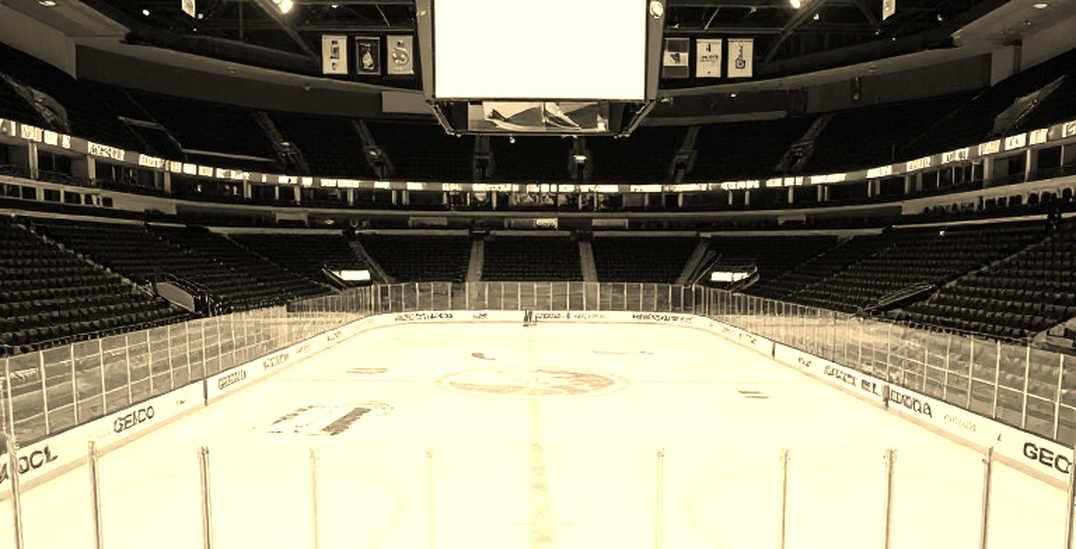
When an upset happens, all these layers resonate. That is why moments like NRG beating MOUZ matter - not because they change the world, but because they show the world can change.
What Deserves Remembering
What will we remember about this night?
Perhaps the image of nitr0, at thirty, posting thirteen kills on the T-side at Dust2 - a deciding map in a deciding series. Perhaps the moment NRG let MOUZ pull back to 13-11 on Cache, and how they held firm in the final rounds. Perhaps the last gunshot on Dust2, and the moment thirty-three places on the global ranking were rewritten.
But perhaps the most memorable thing is the truth that in esports, nothing is certain. The world number two can lose to a team fighting to leave the Major bubble. A veteran can play like a rookie. A map can become a declaration of war.
The championship is only a shadow; the journey is what illuminates. And NRG's journey - though just beginning - is shining in a way nobody predicted.
The question for the days ahead is not whether NRG can do this again. The question is: can they - and North American esports as a whole - turn a moment into a trend, or will they sink back into the familiar bubble?
We will know when NAVI or Aurora steps in. And that is why we sit here, keep watching, keep writing in the gap between two teamfights.
Where defeat falls, I pick it up and make it verse. Tonight, both defeat and victory fell. And both deserve to be remembered.